





Sand And Gravel Aggregate
What is Sand and Gravel Aggregate
Sand, gravel and crushed stone are all considered to be aggregates. More simply, aggregates include grains or fragments of rock. They are a non-renewable resource which we benefit from daily, but rarely think about.
Why Choose Us
Commitment to Quality
We only use the highest quality building materials and have a product to meet any budget and to meet any specification for any project. We stand over all our material as well as our technical advice.
We provide a product guarantee on all our material.
Commitment to Service
We pride our selves on providing the highest quality service to our customers. From advising on the best solution to any repair, replacement or new build installation. We work hand in hand with our customers when they need any advice on a solution for any flatroof project.
Commitment to Value
Our products are not only the hightest quality in each price range, we also strive to ensure you will receive value for money. We work closely with the manufacturers of all our products to make sure our customers come back over and over again.


Advantages of Sand and Gravel Aggregate
They help to solidify concrete mixture
Crushed aggregates comprise approximately 60% to 75% of the entire volume of concrete. Crushed aggregates have a significant impact on the quality of freshly mixed and dried concrete, rendering it more compact, decreasing permeability (which makes it far more resistant to water) and also changing heat retention values.
01
Reduces the amount of water used
Aggregate, depending on its porosity, can retain moisture both internally and externally. As a result, aggregate has the ability to absorb water.
02
Increase the mechanical strength of the concrete or asphalt
While a smooth surface increases workability, a more coarse surface generates a stronger link between both the paste as well as the aggregate, leading to greater strength. The amount of paste required for workable concrete is influenced by the grade, or size distribution, of the material.
03
The water permeability of concrete is lowered and its water resilience continues to increase
The aggregate size is larger, the pores are larger, and the permeability is better. The internal porosity of the coarse aggregate specimen is bigger than the internal porosity of the fine aggregate specimen under similar conditions, which results in an increased permeability coefficient.
04
Heat retention properties are modified
The thermal conductivity of concrete varies with density, with heavier particles having a higher thermal conductivity. As the temperature rises, pore water loss and drying of cement are reported to diminish the conductivity of concrete.
05
Sand and gravel aggregate seem like abundant natural resources, but they are not easily renewable. While gravel can be formed by crushing rocks with machinery, it can take years for sand to form. And at the rate of extraction worldwide, the natural renewal rate cannot keep up with the increasingly high demand.
Although the amount of sand in the world appears abundant-e.g. in deserts that span continents-there is actually a decline in the amount of usable sand. Only certain types of sand are usable in the construction industry.
Desert sand, for example, is not suitable for concrete production or land reclamation because the wind erosion process forms round grains that do not bind well for use in concrete and construction. The specific usable sand is known as construction sand. And as the world's population and cities grow, there will be an ever-increasing demand for this diminishing resource.
The estimated global consumption of sand and gravel is around 50 billion tons per year. And sand mining alone is a 70 billion industry. So sand has become an increasingly important and valuable resource over the years as the demand for it in the global construction industry grows and its availability declines.
Infrastructure
Sand and gravel aggregate are essential for building the roads, highways, buildings, homes, and other infrastructure we depend on to live our lives. sand and gravel aggregate helped build the schools we learn in, the buildings we work in, the hospitals we heal in, and the homes we build our lives in. And the list goes on for all the other types of buildings we rely on for entertainment, food, and things we deem as necessities.
Along with being used as a construction material, these natural aggregates also help form the land that supports our infrastructure such as bridges and highways.
Habitats
Sand and gravel aggregate make up the foundation of many natural habitats, such as beaches, riverbeds, and aquatic and riparian habitats. And when used for land reclamation, the newly-formed habitats provide homes for various wildlife.
Land reclamation
After a sand and gravel quarry is no longer in use, aggregate companies give back to the Earth by creating new habitats, such as greenspaces, beaches, and lakes. This newly reclaimed land often provides a natural space for both humans and wildlife to inhabit, sometimes with neighbouring home developments, or as parks and swimming holes.
With their many uses, sand and gravel are a special natural resource. Our homes, roads, buildings, and cities wouldn't be what they are today without the use of sand and gravel. And the places we go to escape the city, such as lakes and beaches, may not be as pristine and filled with wildlife without these natural resources supporting them.
Although sand and gravel may not seem like the most captivating topic to think or read about, don't overlook the important role they play in all of our lives. As with all of Earth's natural resources, it's important not to take these for granted.
So the next time you sit on a beach, drive down a road, walk on a sidewalk, or admire a beautiful garden landscape, consider the important role sand and gravel play in our lives.
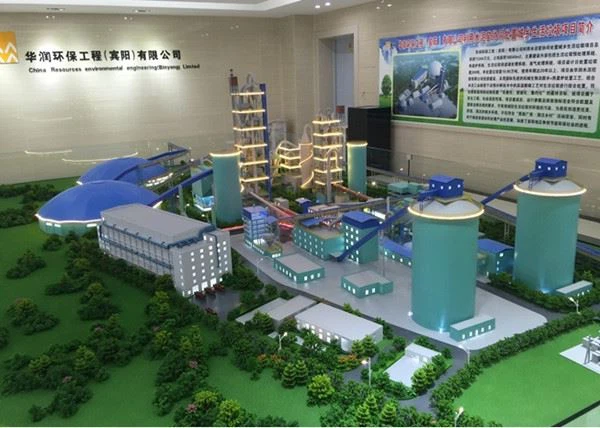
Our sand and gravel aggregate have both the technology as well as the operational and technical capacity to develop products that meet the requirements and specifications of our clients.
Many types of construction materials, including concrete, asphalt and mortar, utilize sand and gravel aggregates as key ingredients. Using sand and gravel aggregate materials for concrete reduces production costs and increases the resistance of concrete mixes. Crushed sand and gravel aggregates make up for around 60% to 75% of the volume of concrete. These crushed sand and gravel aggregates significantly affect the properties of freshly-mixed and hardened concrete – making it more compact, decreasing its permeability (which makes it more water-resistant), and modifying its heat retention values. To be able to cater for the variety of different uses of sand and gravel aggregate materials, offers a wide range of sand and gravel aggregates to accommodate our clients'needs.
A Look at the Importance of Sand and Gravel Aggregates and Their Many Uses
Have you ever stopped to think about the role sand and gravel play in your life? Probably not.
Sand and gravel is a large business, meeting the many demands for growing cities. From residential, commercial, and municipal construction to paving roads and residential driveways, these aggregates play a major role in our lives.
Sand and gravel aggregates have various uses, including their use in mixing cement materials such as concrete, mortar, and plaster. Many construction projects wouldn't be completed well without the use of these aggregates. And our homes and cities wouldn't be what they are today without these valuable resources.
These aggregates are also important in the natural world. They form the foundation for bodies of water, such as lakes and riverbeds. And countless species of wildlife depend on these aggregates for their habitats.
And while many of us take these seemingly mundane resources for granted, they are some of the major building blocks of our modern life. With so many uses, they deserve some acknowledgement and praise.
So here's a look at where sand and gravel come from and their many uses in our day-to-day lives.
How to Choose the Right Sand and Gravel Aggregate for Your Construction
The location of your construction project is an important factor to consider when choosing the right aggregate material. The availability of certain types of aggregate materials may vary depending on the location. For example, if your project is located near a river, you may have access to a large supply of sand and gravel. On the other hand, if your project is located in an urban area, you may need to consider using recycled concrete or other alternative materials.
The type of construction project you are working on is another important factor to consider when choosing the right aggregate material. Different types of construction projects require different types of aggregate materials. For example, if you are working on a road construction project, you may need to use a specific type of aggregate material that is designed to withstand heavy traffic and harsh weather conditions.
The desired properties of the finished product are another important factor to consider when choosing the right aggregate material. Different types of aggregate materials have different properties, such as strength, durability, and permeability. For example, if you are working on a project that requires a strong, durable material, you may need to use a type of aggregate material that is known for its strength and durability.
The environmental impact of the aggregate material is another important factor to consider when choosing the right aggregate material. Some types of aggregate materials, such as recycled concrete, are more environmentally friendly than others. By choosing an environmentally friendly aggregate material, you can reduce your environmental impact and promote sustainability.
The cost of the aggregate material is another important factor to consider when choosing the right aggregate material. Different types of aggregate materials have different costs, and it is important to choose a material that fits within your budget. However, it is important to remember that the cheapest option may not always be the best option, as it may not provide the desired properties or environmental impact.
In conclusion, choosing the right aggregate material for your construction project is essential to ensuring its success. By considering factors such as the project location, type of construction project, desired properties of the finished product, environmental impact, and cost, you can choose an aggregate material that meets your needs and provides the foundation for your construction project. Whether you are working on a road construction project, a building project, or a landscaping project, there is an aggregate material that is right for you.

The formation process of sand and gravel aggregate involves the movement of rocks and minerals over time. As rocks are subjected to weathering and erosion, they break down into smaller particles, resulting in the formation of sand. This process can take thousands or even millions of years, as rocks are exposed to various elements such as water, wind, and temperature changes.
Gravel, on the other hand, is formed when rocks are further transported by water, wind, or ice. The constant movement and friction cause the rocks to become rounded or angular in shape. The size and shape of gravel particles can vary depending on the distance they have traveled and the forces they have encountered along the way.
It is fascinating to think about the journey that sand and gravel aggregate particles have undergone. They may have started as large boulders in a mountain range, slowly weathered away by the elements, and eventually transformed into the small grains and pebbles we see today. The formation process of sand and gravel aggregate is a testament to the power of nature and the intricate processes that shape our planet.
Sand and Gravel Aggregates Production Process
The weathering of rocks over many years produces sand and gravel naturally. Rocks erode over time, breaking apart and travelling along rivers and streams. These rocks may have also travelled with ancient glaciers that carved the landscape. These aggregates eventually settled and formed deposits in riverbeds, glacial lakes, and beaches.
Sand is mostly composed of quartz. The weathering of igneous rocks such as granite produces sand naturally. As quartz is ground down, it becomes tiny grains of sand deposited in beaches and riverbeds. Sand can also be formed from the weathering of shells and fossils.
Natural gravel comes from the weathering of various types of rocks, including lava rock and quartzite. However, gravel can also be human-made. Gravel suppliers will crush stone, such as granite, using machinery.
Different sizes of gravel can be produced for various uses. For example, larger gravel sizes are used for drainage systems and driveways, while smaller gravel is used in stone beds and decorative pathways in gardens.
The sharp edges of limestone and dolomite crushed stone gravel make this type of gravel ideal for concrete production.
When a sand or gravel deposit is found, aggregate suppliers will dig pits to source these aggregates. Sand and gravel pits and quarries are usually located near consumers since the cost of transporting these heavy materials is high. For convenience and ease of access, sand and gravel suppliers are often located near large and expanding urban areas, such as Ottawa.
The proximity to customers reduces travel costs and fuel consumption, reducing the overall impact of the sand and gravel industry on the environment.
When long-distance transportation of sand and gravel is needed, freighters and rail cars are often used. For businesses and residents in Ottawa, sand and gravel suppliers are located nearby to meet your construction project needs.
What are sand and gravel aggregate? Aggregates are simply any collection of rocks. In the sand and gravel aggregate industry, these rocks are classified as crushed stone, sand, gravel, and slag. We use sand and gravel aggregate every day. Streets, bridges, roads, and sidewalks are made of concrete or asphalt which is mostly made up of sand and gravel aggregate combined with a binder that acts like glue. Concrete is used in foundations and basements for houses. Other buildings sometimes use concrete throughout their structures. But did you know that many items you use every day have sand and gravel aggregate in them? Your toothpaste has sand and gravel aggregate in it. Glass is made from sand, which is an aggregate. Minerals and sand and gravel aggregate are in plates, dishes, pots and pans, baby powder, household cleaners, makeup, medicines, paints, pencils, fertilizers, wallboard, and more including some of the foods you eat!
Sand is a widespread but highly variable resource in that was formed mostly by glacial actions of large ice sheets and then sorted by running water. Sand can be used as fill, or more often the coarser parts find use as components of concrete or asphalt pavement. Sand, a finer granular material, also is important in concrete and in making mortar, and in snow and ice control. Very fine-grained sand finds use in foundries to make molds, and also in sandblasting, glass-making, or even as golf-course sand.
Gravel: The term gravel applies to a range of particle sizes, rather than a specific rock or mineral type. Gravel is colored by the rock types present. It is a collection of rock particles that are at least .08 inches in diameter sizes, but may also include boulders over 10 inches in diameter. Gravel is loose rock that is often rounded in shape from being worn by water at some point. Gravel can be used alone as fill, for gravel roads, or residential driveways. Gravel can also be used as a component of concrete or asphalt pavement.
What Is the Difference Between Sand and Gravel Aggregate Aggregate?
The difference between sand and gravel aggregate is simply the size of the material in question. In this article we will expand on this size classification, as well as reasons behind variations in size. Sand is a granular material derived from the erosion of rocks, ranging in size from 0.075 mm to 4.75 mm. Sand particles are larger than silt but smaller than gravel. Gravel is a granular material derived from the erosion of rocks, ranging in size from 4.75 mm to 75 mm. Gravel particles are larger than sand but smaller than boulders.
Have you ever stopped to think about the role sand and gravel play in your life? Probably not.
Sand and gravel aggregate is a large business, meeting the many demands for growing cities. From residential, commercial, and municipal construction to paving roads and residential driveways, these aggregates play a major role in our lives.
Sand and gravel aggregate have various uses, including their use in mixing cement materials such as concrete, mortar, and plaster. Many construction projects wouldn't be completed well without the use of these aggregates. And our homes and cities wouldn't be what they are today without these valuable resources.
These aggregates are also important in the natural world. They form the foundation for bodies of water, such as lakes and riverbeds. And countless species of wildlife depend on these aggregates for their habitats.
And while many of us take these seemingly mundane resources for granted, they are some of the major building blocks of our modern life. With so many uses, they deserve some acknowledgement and praise.
So here's a look at where sand and gravel come from and their many uses in our day-to-day lives.
Certificate
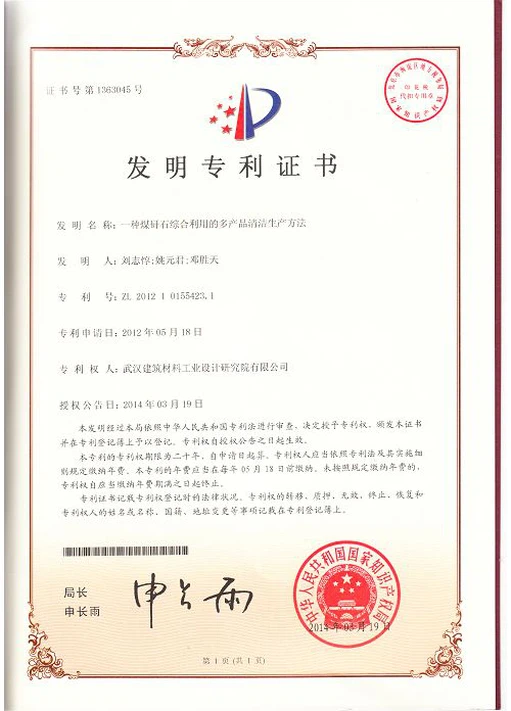
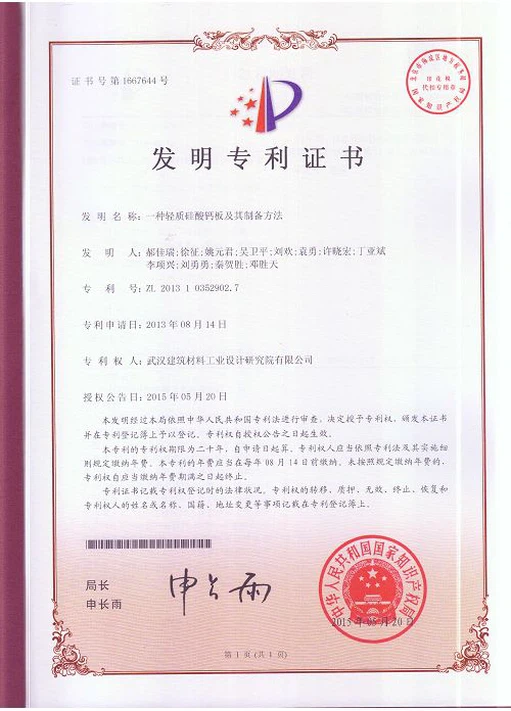
Obtained many national science and technology conference awards, provincial and ministerial engineering design and technical progress awards, etc., and own nearly 60 patents.

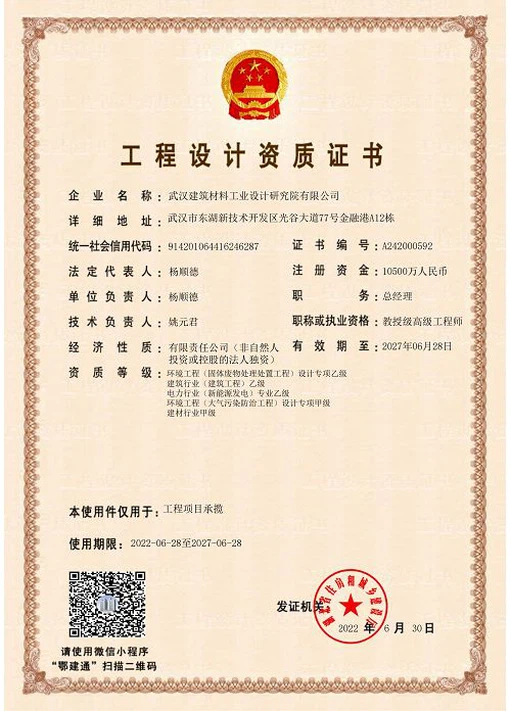
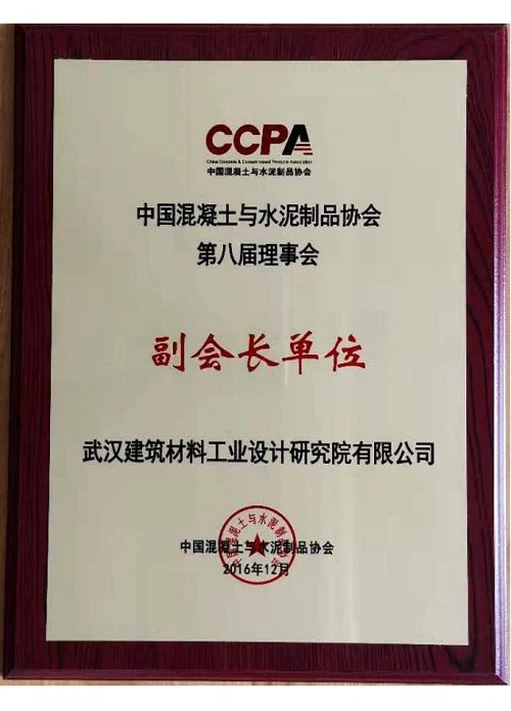

Our Factory
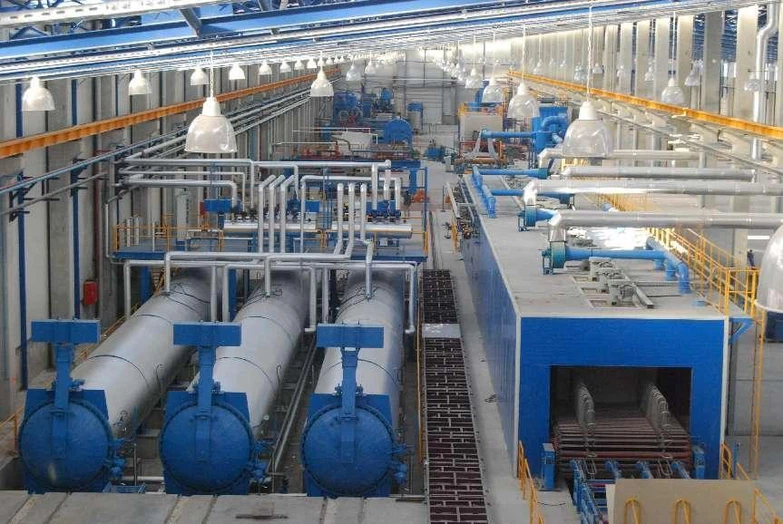
Wuhan Building Material lndustry Design & Research Institute Co., Ltd., subordinated to CNBM was established in 1965. lt is the leading company in fiber cement board / calcium silicate board machinery industry, and has sold more than 200 lines all over the world.The Company's design center has more than 200 engineers, who can give customers the most professional design. The Company also has modern laboratories to help the customers to choose the most suitable rawmaterials and production formula through the testing of raw materials and final products.

FAQ
Q: What is sand and gravel aggregate?
Q: What is sand and gravel mix used for?
Q: What is the difference between gravel and aggregate?
Q: What is a substitute for sand and gravel?
Crushed Glass: Crushed glass is a recycled material that can be used as a substitute for sand in concrete. ...
Quarry Dust: Quarry dust is a by-product of the crushing process during quarrying operations. ...
Fly Ash: Fly ash is a by-product of coal combustion in power plants.
Q: How much sand and aggregate do I need for concrete?
1m3 of concrete = 150l water + 250kg cement + 700kg sand + 1200kg aggregates.
Q: What types of aggregates should be avoided?
Q: Can you separate a mixture of sand and gravel?
Q: What is the ratio of sand and aggregate mix?
Q: Can dry concrete be made by mixing sand gravel and cement?
Q: What is sand and gravel made of?
Q: What is the difference between sand and aggregate?
Q: What is mixed with sand and gravel to make concrete?
Q: Where does sand and gravel come from?
Q: Is aggregate the same as gravel?
Q: What is the difference between gravel and aggregate?
Q: Where are sand and gravel usually found?
Q: Is sand and gravel renewable?
Q: What would separate sand and gravel?
Q: Which physical property is most helpful for separating a mixture of sand and gravel?
(a) Fine sand and coarse gravel can be separated based on their size. This can be done by using a sieve that will allow smaller particles (fine sand) to pass through.
Q: What is the best way to separate stones and sand?
It is found in grain mills and on construction sites. Impurities such as husks and stones are removed from wheat in the flour mill.
Sieving is used to separate pebbles and stones from sand.
Hot Tags: sand and gravel aggregate, China sand and gravel aggregate manufacturers, suppliers, factory, Cement Kiln Co processing Of Construction Waste, gravel aggregate production line, Energy Conservation and Environment Protection, Sand Aggregate production line, high temperature Steel Slag and Slag Treatment, Sand and Gravel Aggregate processing system
Previous
Sand And Gravel AggregateNext
No InformationYou Might Also Like


Send Inquiry