




New Building Materials
Wuhan Building Materials Industry Design & Research Institute Co., Ltd, established in 1965, is a wholly-owned subsidiary of Sinoma Energy Conservation Ltd. which belongs to CNBM Group. Possessing Class A design qualification in the building materials industry, specializing in new building materials, mainly focusing on fiber cement board production line, aerated concrete block production line, fiber cement board production line, some related equipment.
Why Choose Us
R&d And Innovation Capacity
The company has a strong R & D and innovation capacity of equipment, with more than 60 patents and software copyrights, and has been certified as a national high-tech enterprise.
Technical Staff
There are 400 employees, including 16 professor-level senior engineers, 70 senior engineers, 90 mid-level and above engineers, and 310 other professional and technical personnel.
Rich Experience
Our company has been deeply engaged in the Calcium Silicate board / Fiber Cement board industry for more than 40 years, so far, it has cooperated with many largegroup companies such as SHERA, Saint-Gobain, ASK, VEFA, Etex, Conch Cement, etc., and has cooperated in more than 200 production lines in the world.
Reasonable Price
We only use the highest quality building materials and have a product to meet any budget and to meet any specification for any project.


Types of New Building Materials
The New Building Materials Produced by Our Company Mainly Include the Following Types:
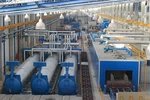
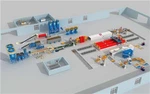
Fiber Cement Board Production Line
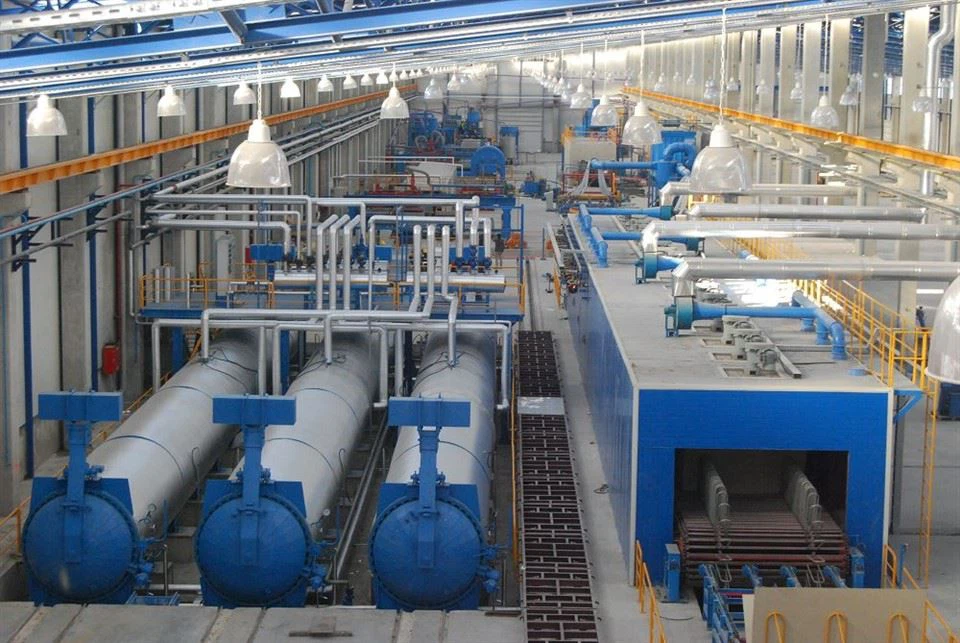
Fiber cement board production lines are complex manufacturing systems specifically designed for the production of fiber cement boards.
Aerated Concrete Block Production Line
The aerated concrete block production line is a comprehensive manufacturing system designed specifically for the production of aerated concrete blocks. This line is capable of producing large quantities of aerated concrete blocks in a short period.
Fiber Cement Board Production Line Specification
The flow-on process is a method for producing fiber cement products. It uses high-concentration slurry to be laid on felt. The slurry undergoes multiple vacuum filtration, dehydration, and extrusion to form a product sheet.
|
Specification |
|
|
Forming drum size |
Ф1650×1750mm |
|
Felt speed |
40-90m/min |
|
Forming drum linear pressure |
700N/cm(max) |
|
Main drive motor power |
55-90kw |
|
Felt washing water pressure |
0.8-1.5MPa |
|
Vacuum boxes quantity |
8-10 Unit |
|
Weight of equipment |
35t |
Advantages of Fiber Cement Board Production Line
Various Options: With our machine, you could have more options to choose various raw materials for the fiber cement board production than using the traditional production line.
Efficient And Automated Production: The fiber cement board production line adopts advanced automation technology and equipment, and all links from raw material ratio, mixing, molding, curing to cutting, packaging, etc. are highly automated.
Stable And Reliable Product Quality: Due to the high automation and standardized operation of the production line, the production process of fiber cement boards is strictly controlled.
High Demand And Wide Range Of Uses: Fiber cement boards are in great demand due to their excellent durability, weather resistance, and flame retardancy. They are widely used and can be used in a variety of applications, including exterior wall cladding, interior walls, roofs, and floors.
Application of Fiber Cement Board Production Line
Residential Construction
In home construction, fiber cement boards serve as durable siding and roofing. They mimic wood's aesthetic appeal without its high maintenance needs.
Commercial Buildings
Fiber cement boards provide low-maintenance, visually appealing siding for office buildings. They resist rot and insects, making them ideal for long-term use.
Industrial Structures
The boards create the walls and roofs of factories. Their durability stands up to the rough conditions of industrial sites.
Agricultural Facilities
Fiber cement boards construct and clad barns and animal shelters. Their weather resistance protects livestock and equipment.
Schools
Fiber cement boards line and clad school buildings. Their smooth surfaces are easy to clean. The boards also withstand the heavy use typical in educational settings.
Hospitals
Fiber cement boards form the walls and ceilings of hospital buildings. Their resistance to germs makes them suitable for clinics and operating rooms.
Benefits of the Aerated Concrete Block Production Line
Eco-Friendly: The aerated concrete block production line uses recyclable materials, reducing the environmental impact of construction. Additionally, the energy-efficient properties of aerated concrete blocks contribute to a greener, more sustainable building industry.
Efficiency and Productivity: The automated features of the aerated concrete block production line significantly improve production efficiency.
Consistency Of Product Quality: The precision and control provided by automated machinery ensures that every aerated concrete block produced meets strict quality standards.
Scalability: The aerated concrete block production line can be expanded to meet different production needs.This scalability ensures that production lines remain efficient and profitable even with fluctuations in output.
Application of Aerated Concrete Block Production Line
Residential Construction
The excellent insulation properties of aerated concrete blocks help maintain a stable indoor temperature, reducing energy consumption and costs. Their lightweight nature eases handling and speeds up construction.
Commercial and Industrial Buildings
Aerated concrete blocks can expedite the construction of large buildings, saving time and money. Their eco-friendly composition aligns with the green building practices increasingly embraced in the commercial sector.
Partition Walls and Cladding
Lightweight aerated concrete blocks are easy to work with and are often used for interior divisions. Their thermal insulation properties make them an excellent choice for cladding, improving a building's energy efficiency.
Infrastructure Projects
Aerated concrete blocks are employed in sound barriers along highways and railways, reducing noise pollution. In infrastructure, speed is essential, and aerated concrete blocks help in faster construction, reducing project timelines.
Process Of Aerated Concrete Block Production Line
Preparation of Raw Materials
Cement, lime, sand, gypsum, water, and an expansion agent are the basic materials required to construct aerated concrete blocks.
Mixing
The basic components are combined in a slurry mixer to create a homogeneous mixture. The slurry is then poured into various-sized and shaped moulds.
Setting and Hardening
Depending on the temperature and humidity levels, the mixture can be set and hardened for many hours after the moulds have been filled with the slurry.
Auto Claving
After the blocks have hardened and set, they are placed in an autoclave, a high-pressure, steam-cured vessel, for many hours at a high temperature and pressure.
Cutting and Finishing
Following autoclaving, the blocks are removed from the moulds and cut with a wire saw into the required sizes.
Drying And Packaging
After the blocks have finished drying in a drying chamber, they are prepared for packaging and transportation.
Our Certificate


Video