




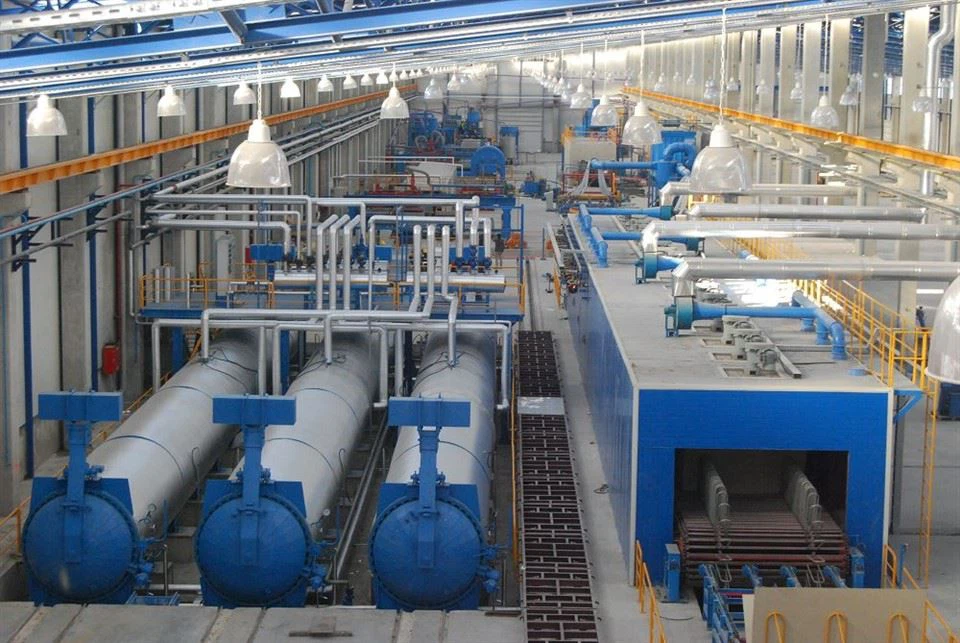
Fiber Cement Board Production Line
Leading MACHINERY Solution Provider Since 1965
lt is the leading company in fiber cement board / calcium silicate board machinery industry, and has sold more than 200 lines all over the world.
Why Choose Us
Factory Strength
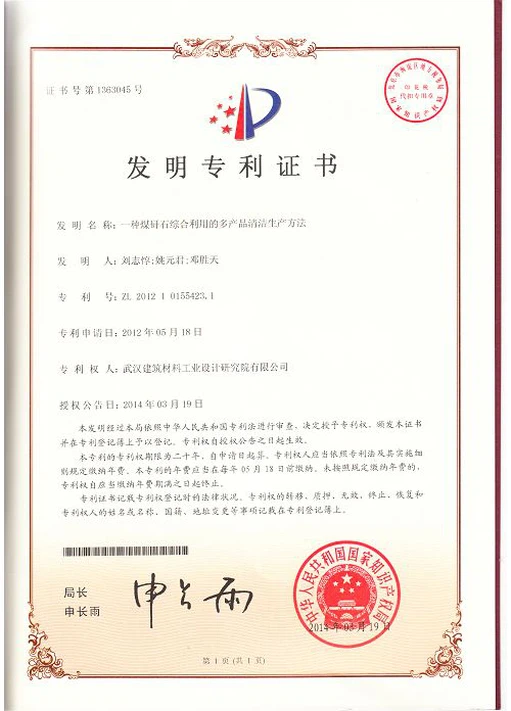
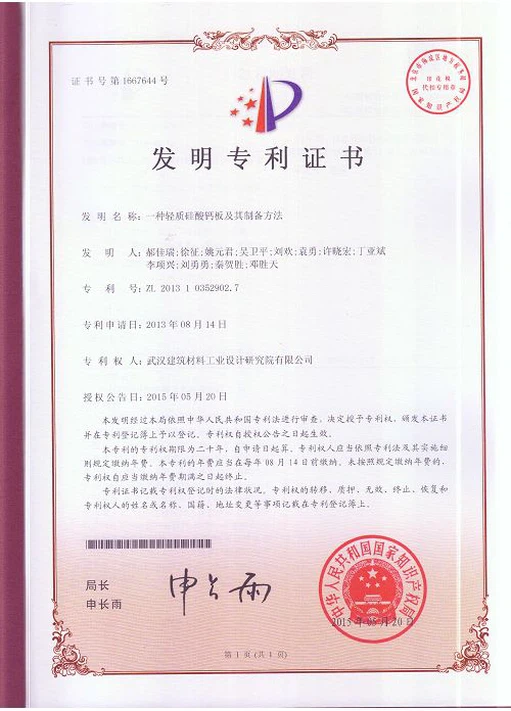
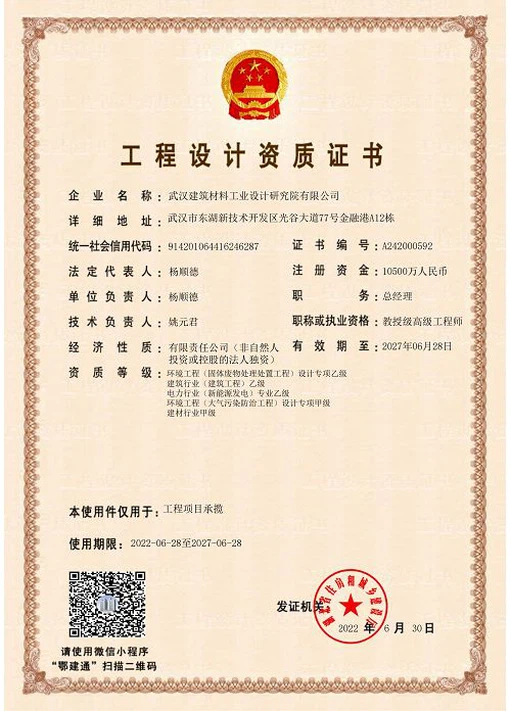
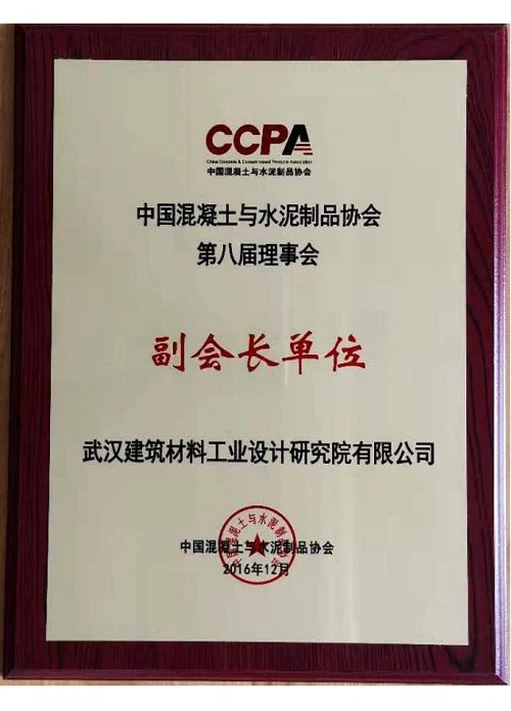
Wuhan Building Material lndustry Design & Research Institute Co., Ltd., subordinated to CNBM was established in 1965. lt is the leading company in fiber cement board / calcium silicate board machinery industry, and has sold more than 200 lines all over the world.
Rich Experience
Wuhan Institute has been deeply engaged in the Calcium Silicate board / Fiber Cement board industry for more than 40 years, so far, it has cooperated with many large group companies such as SHERA, Saint-Gobain, ASK, Conch Cement, etc., and has cooperated in more than 200 production lines in the world.
Professional Team
400 Employees, including 16 professor-level senior engineers, 70 senior engineers, 90 engineers with medium-grade professional title or above, and 310 technical staff with other majors.
Quality Control
The Company also has modern laboratories to help the customers to choose the most suitable rawmaterials and production formula through the testing of raw materials and final products.
Related Product

Fiber Cement Board Production Line
The Company's design center has more than 200 engineers, who can give customers the most professional design. The Company also has modern laboratories to help the customers to choose the most suitable raw materials and production formula through the testing of raw materials and final products.

Aerated Concrete Block Production Line
Aerated concrete sheet is a multi-porosity panel made of silica material and calcium material as main raw material, aluminum powder as gas producing material, steel mesh treated with anticorrosion treatment, mixing with water, pouring and molding, pre-curing and cutting, autoclaved curing and curing.
This composite material has stone-like qualities, yet it is versatile as wood. Thanks to its excellent dimensional stability, fibre-cement cladding doesn't budge when temperature changes, unlike PVC or wood. A facade or roof protects your home effectively against the elements such as rain, wind, frost and heat, keeping you cosy inside. Fibre-cement is not only water and weather resistant, its mineral composition makes it also impervious to rot, rust, mould, insects and rodents. What's more, it is a non-combustible building material, giving you extra peace of mind around your precious home. As UV-resistant pigments are applied during the production process, the colours age beautifully, acquiring a nice patina over time.
Fibre-cement boards and slates combine the best of alternative materials in one. It is light and easy to handle, just like wood or PVC but with dimensional stability. It is robust, so that the breakage during installation and lifespan is reduced to a minimum. Another considerable advantage is that fibre cement boards are low maintenance. When they get dirty, you just need to wipe them down with soapy water and they are as new. No need to repaint or stain every few years.
Installation Methods of Fiber Cement Board
To install, first lay out lines according to the blueprint requirements and actual on-site dimensions. Use a dynamic arm to horizontally fix the main keel onto the floor, with an approximate distance of 1m between each keel, ensuring that the cladding keels are installed on the same level.
When laying the fiber cement board, the long side of the board must be perpendicular to the direction of the auxiliary keel, and the joints in the board width direction should be staggered.
The distance from the screw to the edge of the board should be 15mm, and from the screw to the corner of the board, 50mm. The distance between screws should be between 180 and 200mm.
Prior to sealing the steel plate, snap a line on the surface of the steel plate according to the partition of the keel, and pre-drill a shallow pit at the position where the nail head passes to ensure that after the installation screw, the board surface is flat, the screw head sinks into the board, and is less than 0.5mm from the board surface.
When fixing the fiber cement board, start from the center and then secure the perimeter. The gap between each panel should not be less than 5mm, and there should be an expansion joint 10-15m from the top of the longitudinal channel.
Application Of Fiber Cement Board Production Line
Exterior Facades
Fiber cement board production line have become the go-to solution for avant-garde exterior facades. The material's adaptability allows architects to craft visually striking facades that seamlessly blend aesthetics with functionality, setting a new standard for modern architecture.

Interior Design Innovations
Stepping beyond the exterior, these fiber cement board production line infiltrate interior spaces with a transformative impact. From textured wall coverings to minimalist ceiling designs, the versatility of light fiber cement boards unlocks a realm of possibilities, prompting interior designers to redefine spatial aesthetics.
Integration In Smart Buildings
As the world embraces the era of smart buildings, fiber cement board production line find themselves at the forefront of integration. Their compatibility with cutting-edge technologies makes them an integral part of the infrastructure supporting the seamless convergence of digital connectivity and physical spaces.
Fiber Cement Board Production Process Introduction
Water Tank And Cement Tank Process
There Is One Clean Water Tank And One Muddy Water Tank ;Both Water Tank Body Is Welded By Carbon Steel,The Muddy Water Tank Is Used To Collect Back The Recycle Water From Sheets Production Process,Muddy Water Take To Mix Into Slurry Process ,For Clean Water Tank Is Used To Take Clean Water To Clean Felt And Net Cage Normally.
Paper Pulp Process
Paper Pulp Process Includes Paper Shredder Machine,Refiner,And Paper Pulp Storage Tank
Paper Shredder Is Used To Shredder The Kraft Papers
Refiner Used To Grind The Paper Pulp To Be Slurry And Pumping Them To The Paper Pulp Storage Tank.
Paper Pulp Storage Tank Is Used To Store The Paper Pulp.
Flow-On Slurry Vacuum Water Dehydration Process
Can Choose Flow-On Slurry Forming Sheets System Or Hatschek Types Forming Sheets System To Form Sheet,We Can Customize According To Customers' Requirement.
Well Mixed Slurry Flow Into Flow-On Slurry Box,Then From Slurry Box Convey To Running Felt To Form Slurry Layer,With Vacuum Dehydration And Chest Roller Press To Form Sheet Layer,After Layers Rolling Round Forming Sheets Drum Roller ,Then With Automatic Cutting To Form Flat Wet Sheets .
Air-Water Separator :It Is Used To Separate The Steam Water Mixture Extracted From The Vacuum Box, Flow Into The Collecting Well, And The Air Is Pumped Back To The Vacuum Pump.
Flow-On Slurry Sheet Forming Process
After Forming Roller Forming Sheets,Then With Automatic Laser Positioning And Cutting ,Whole PC Of Wet Sheets Go Into Convey Process.
High Pressure Water Cutting System
This High Pressure Water Cutting System Is Our Own Patent Equipment,With Imported High Pressure Water Pump To Make High Pressure Water To Make Tidy Cutting Of Wet Sheets On Conveyor.
Forming Wet Sheet And Wet Sheet Conveying Process
This Process Is Used To Convey The Cut Well Wet Sheet From Forming Roller Convey The Wet Sheets To Position And Make Automatic Edge Cutting .
Automatic Stacker
Two Sheets Can Be Stacked At One Time. The Suction Cup Sucks Up The Wet Sheets From Receiving Conveyor machine And The Template On The Trolley At Another Working Position, And Then Stacks Them On The Trolley At The Middle Position(With The Vacuum Suction Of High-Pressure Fan). The Accurate Movement Of The Suction Cup Is Realized By The Gear On The Swing Arm Pushed By The Hydraulic Push Rod.
PLC Control, Automatic Operation.
Function: The Automatic Stacker Is Used To Sort And Stack The Quality And Inferior Products Of Fiber Cement Board/Calcium Silicate Board.
The Products Are Stacked Orderly And Highly Automated, Which Will Effectively Improve The Production Efficiency.
Press Machine
Is Used To Increase The Density And Strength Of Products ,
Standard Pressure:7000ton, Press Table Size: 1350 * 2700/3200mm, Spacing: 1200mm, Working stroke: 400mm, Pressure Speed: 0.05 ~ 0.25mm/s ;
Return Speed: 15 mm / S
In And Out Of Press Transport Car: One Unit.
Power: 27.5kw
Trolley Traction System
Allowable Load: 20T
Table Rail Inner Distance: 750mm
Walking Mechanism:
Reducer Model: Fa67-60-y-1.5, I = 50
Matching Motor Speed: 1380r / min, Power: 1.5kw
Traveling Speed Of Trolley: 9m / min
Vacuum Demoulding Template Machine
The Movement Of The Car And The Rise And Fall Of The Suction Cup Are Controlled By The Servo Motor.
The Demoulding Template machine Separates The Template And The Sheets On The Trolley, The Template Is Put On The Oil Brush Machine To Brush Oil, And The Sheets Is Piled On The Other Side Trolley. Add One Autoclave Interleave Spacer For Every 150 mm Sheets.
The Accurate Movement Of The Suction Cup Is Realized By The Gear On The Swing Arm Pushed By The Pneumatic Push Rod.
PLC Control, Automatic Operation.
Autoclave Process
Due To The Characteristics Of Fiber Cement Board/Calcium Silicate Board, Lime And Quartz Sand Powder Are Used As The Main Raw Materials In The Production Process, Which Needs To Get Chemical Reaction Under High Temperature And Higher Pressure Environment,Can Let All Raw Materials Mixed Enough Well,And Make The Sheets Better Hardness And Strength.
Boiler
In The Production Process Of Fiber Cement Board/Calcium Silicate Board,Autoclave And Dryer Are Used For Processing, And
The Heat Energy Of Autoclave And Dryer Is Supplied By Boiler!
Dryer
It Is Used For Drying Fiber Cement Board/ Calcium Silicate Board ,After Autoclave Curing ,The Moisture Content Of Fiber Cement Board Is About 25%. Before Sanding, Edging And Chamfering, The Moisture
Content Should Be Reduced To Lower Than 15% By Dryer. The Dryer Has The Advantages Of High Production Efficiency, Beautiful Appearance, Convenient Maintenance And Easy Operation.
What Factors Determine The Price of Fiber Cement Board?
Adding fibers to a high-quality cement matrix can improve the material's crack resistance and brittleness and increase its deformation capacity.
The fiber type, length, cross-sectional dimensions, and bonding properties with the cement matrix all affect the macroscopic properties of the fiber cement board material.
Fiber cement board can be formed by various methods such as traditional casting, papermaking, molding, extrusion, etc. The training method will usually have a certain impact on your performance.
The price of fiber cement board is determined by different raw materials, production processes and the inherent properties of the board itself.
Factors that affect the price of fiber cement board raw materials are:
Composition: Fiber type, cement grade, pulp
Production Process: Type of production equipment, whether the production equipment is complete (hydraulic press and its tonnage).
Aftercare: National regulations require a mandatory seven-day curing period in a designated curing room.
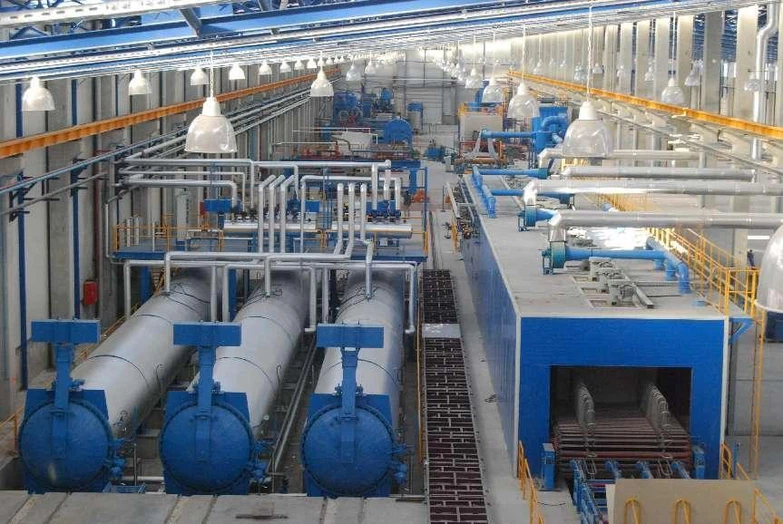
Our Factory

Certificate


FAQ
Hot Tags: fiber cement board production line, China fiber cement board production line manufacturers, suppliers, factory, New Building Materials, Aerated Concrete Block Production Line
You Might Also Like


Send Inquiry