




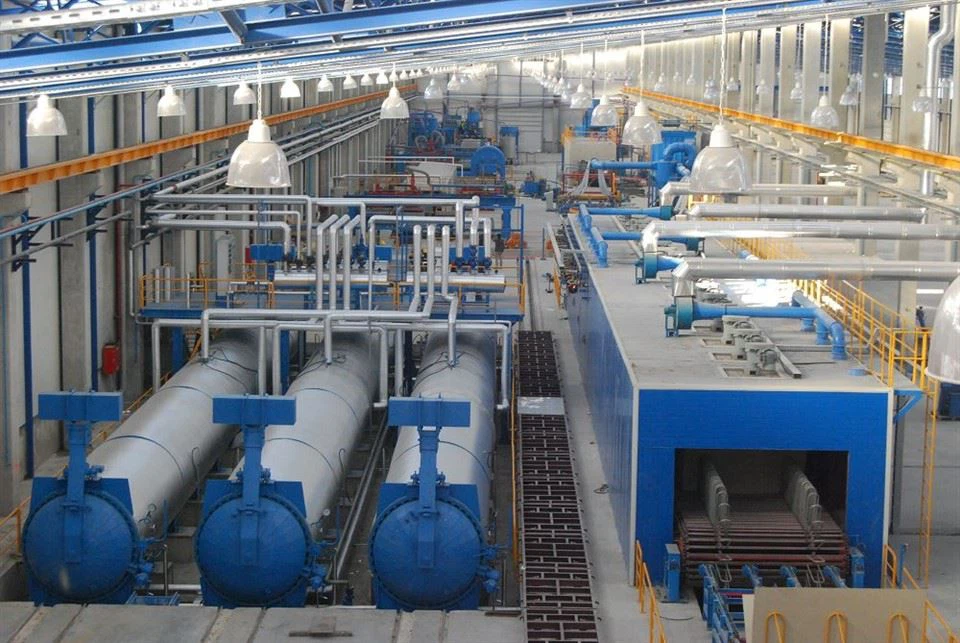
Fiber Cement Board Production Line
Company Advantages
Advanced Equipment
Equipment based on the latest technological developments has higher efficiency, better performance and stronger reliability.
After-Sales Service
The professional and thoughtful after-sales team makes you worry-free after-sales. Intimate service and strong after-sales team support.
Rich Experience
Wuhan Institute has been deeply engaged in the Calcium Silicate board / Fiber Cement board industry for more than 40 years, so far, it has cooperated with many large group companies such as SHERA, Saint-Gobain, ASK, Conch Cement, etc., and has cooperated in more than 200 production lines in the world.
Professional Team
The company has a strong R & D and innovation capacity of equipment, with more than 60 patents and software copyrights, and has been certified as a national high-tech enterprise.
What is Fiber Cement Board Production Line
Fiber Cement Board Production Line is a building material typically used as siding or trim. This material was designed to provide a product that is durable and able to withstand climate extremes. Fiber cement boards require little maintenance and offer several advantages over traditional siding materials such as vinyl or wood.Fiber cement board consists of cement, sand, and cellulose fibers that are manufactured in layers to form sheets of varying thicknesses. The boards are manufactured using a process called autoclaving, which uses high-temperature steam curing to form the board and to increase the strength and stability of the sand and cement.


Benefits of Fiber Cement Board Production Line
Extensive Applications
Fiber cement board is used in various domestic power generation industry, fire and flame retardant for cable projects in factories, chemical enterprises and other places with intensive electricity costs. It is also the best fire retardant material for interior decoration fire retardant projects in large shopping malls, hotels, guesthouses, document halls, closed clothing markets, light industry markets, theaters and other public places.
Light Weight
Density: Traditional technology-produced fiber cement board is 1.2 - 1.6g/m3, and our board is 1.0-1.7g/m3. Compared with the traditional board, our board could be lightweight. For example, on a 10mm 1220x2440mm board, the panel weight could be 10kg lighter. That means saving more labor costs during production and transportation, which also means the delivery could be longer based on the same situation.
Eco-friendly & Customized
This new production technology uses the fiberglass mesh as the reinforced material instead of the pulp fiber, so that is more environmentally friendly and easy to produce. At the same time, you could adjust different layers of the mesh to achieve different strengths.
Various Options
With our machine, you could have more options to choose various raw materials for the fiber cement board production than using the traditional production line. Because the traditional production line could only use the pulp as raw material, which is an energy-intensive raw material, so that many governments now do not support the production and use of pulp.
What are the Applications of Fiber Cement Board Production Line
Exterior Siding
Used as a cladding material for residential and commercial buildings due to its durability and design options.
01
Roofing
As an alternative to traditional roofing materials, fiber cement board provides excellent weather resistance and fire protection.
02
Interior Wall Cladding
Offers a durable and attractive option for interior walls.
03
Tile Backer Board
Used as a substrate for tile installations in wet areas like bathrooms and kitchens.
04
Decorative Elements
Used for architectural accents, decorative facades, and other creative applications.
05
Durability
Fiber cement board is highly durable and can withstand exposure to harsh weather conditions, including rain, extreme temperatures, and UV rays.
Fire Resistance
The cement component in fiber cement board provides excellent fire resistance, making it a popular choice for building exteriors and fire-rated applications.
Water Resistance
While not completely waterproof, fiber cement board has good water resistance, reducing the risk of rot, swelling, or warping.
Insect and Pest Resistance
Unlike wood, fiber cement board is not susceptible to termite damage or other insect infestations.
Low Maintenance
Once installed, fiber cement board requires minimal maintenance, saving time and effort compared to other building materials.
Design Versatility
It is available in various textures and finishes, allowing for versatile architectural designs and aesthetics.
Eco-Friendly
Fiber cement board often contains recycled materials, making it a more sustainable building option.
Fiber Cement Board Production Line Applications in Construction Projects
Fiber Cement Board for Ceiling
The ceiling fiber cement board usually comes in two forms - panels/sheets and tiles, with different textured finishes. You can use ceiling fiber cement board for traditional ceilings. And for projects with special requirements for acoustic properties, such as auditoriums, lobbies, shared workspaces, hospitals, shopping malls, theaters, etc., you can use a grid design. The ceiling fiber cement tile is an excellent option for the grid pattern of fiber cement board ceilings.
Fiber Cement Board Wall Cladding
Cladding fiber cement panels based on cement fibers are available in board form in various sizes, usually with a thickness of about 8 mm. The cladding fiber cement board can be easily fixed to steel, cement, or wood substrates by means of screws or adhesives. The use scope of the fiber cement board wall cladding varies depending on the application, such as facades, doors, halls, exterior walls, etc.
Cement Fiber Board for Flooring
The fiber cement board flooring can withstand high pressure in high-traffic areas. Therefore, cement fiber board for flooring can be used as the final finished flooring, as well as in both conventional and laminated flooring. Sandwich floors for industrial use are also often made of cement fiber board.
Fiber Cement Board Partition
Fiber cement-based wall partitioning solutions are best suited for high-speed construction projects. The fiber cement board partition is lighter, easier to build, and eliminates the "curing time" associated with brick-and-mortar construction. And siding fiber cement board is ideal for non-load bearing wall construction, which is more durable than gypsum drywall systems. Also, the water resistant fiber cement board is the most suitable for use in wet areas.
Covering For Fire Rated Ductwork Systems
This is one of the best ways to utilize fiber cement board because it adds aesthetic appeal to the building's facade while being used as a casing for fireproof ductwork. In this case, cement panel fiber board for fire rated ductwork would have different types of finishing options, such as painted or textured tile/cladding. In addition, laser or waterjet cutting can also be used to enhance the exterior view of the cement panel fiber board.
How to Choose Fiber Cement Board Production Line
Low Maintenance
Fiber cement board production line doesn't have to be cleaned as often as other types of materials. Any dirt and debris can be removed by simply spraying it with your garden hose and using a soft cloth, sponge or brush to wipe clean. No harsh chemicals or power washing are needed or recommended.Since there are no seams that overlap, dirt and moisture will not accumulate in the crevices. This also provides your home with a layer of protection from the growth of mold and mildew.
Aesthetics
There are many colors available to coordinate with your home's exterior color palette. It comes pre-painted and can significantly improve the curb appeal of your home.Fiber cement siding is available in a variety of styles. Fiber cement planks can simulate the appearance of wood grain or with a smooth modern finish.
Durability
Fiber cement board production line is a material that does not warp, crack, or dent easily. It can withstand very hot and sub-freezing temperatures. Fiber cement siding holds up against heavy rain, hail, sleet, snow, and windstorms. It can even withstand hurricane-level storms.Fiber cement siding pre-paint option is baked on and has a greater resistance to fading from UV rays, chipping and cracking. This provides an even coverage and vibrant color that will last for years.
Energy Efficiency
Fiber cement board production line will help seal your home due to its ability to resist warping and other external damage. You can keep cool air in during the summer, and warm air in during the winter.You can also supplement fiber cement siding with insulation. The gap between the fiber cement board production line and the walls can be filled with foam insulation to help keep your energy costs down.
Raw Materials
The main raw materials of fiber cement board are cement, synthetic fiber, pulp, water, etc. Pulp is a kind of cellulosic mass produced by chemical decomposition of plant fiber. Its main component is cellulose.
Mixing
First, the pulp needs to be dissolved in water, then ground to a certain fineness, and finally added with synthetic fiber. This kind of mixture is usually made in a large silo. After chemical reaction, hydrogen bridge will be generated, which will mix various materials together. Finally, cement is added to the machine and the manufacturing process begins.
Board Making
The part can use Sinopower's fiber cement board making machinery, which is the core part of the production process. Three cylindrical filters are agitated in a cement fiber mixture to form a film of about 0.9 mm thickness, which will surround the mixing stick as required until a certain thickness is achieved. This process takes about 20 to 100 seconds, depending on the size and form of the panel. The diameter of the mixing stick can determine the length of the panel, which can be cut to its original shape. If you need to produce boards of different sizes, you can do it with different option settings.
Pressing And Drying
First of all, the steel template is placed in the middle layer. The pressing pressure is about 10000 tons, so as to discharge the excess water. Then the moisture content of the panel will be reduced from 28% to 15%, and its density will gradually increase. Cement and water will continue to harden gradually through chemical reaction, and heat will be released in the process. This material has enough time to complete the hardening process. After three weeks, its moisture content can be maintained at 7% or 8%, then the panel can be ready for the next procedure. In the first step, the panel needs to be dried. Compared with autoclaved fiber cement, air dried fiber cement has lower porosity and easier processing.
How to Maintain Fiber Cement Board Production Line
Cleaning Tip
This is a general cleaning tip that can help you save time. Surface dirt and grime will flow down the wall with the water, thanks to gravity, so be sure to start at the top.
Use The Right Tools
Here's where you get to make a big decision: Garden hose or pressure-washer. If you rinse the siding with a garden hose, there's not much else needed. But if you choose a pressure-washer, beware of this limitation: To clean fiber cement siding with a pressure washer-A pressure washer can help you cover more ground quickly, but applying too much pressure can actually do damage to your fiber cement siding. To reduce the risk of damage, stay at least 6 feet from the wall and keep the pressure below 1,500 psi.
Remove Stubborn Spots With A Soft Brush Or Cloth
Most homeowners opt for a soft-bristle paint brush, horsehair brush, or chip brush.
Use A Mild Detergent If Necessary
To attack stubborn mold or mildew, create a mild detergent by mixing water with one of the following active ingredients: baking soda, bleach, or ammonia. After gentle scrubbing, rinse the surface with plain water.
4 Steps of Fiber Cement Board Production Line Installation
Choosing Your Siding
Fiber cement boards are always made from the same combination of materials, a mixture of wood fibers and Portland cement. However, you still have to pick the style and color you want. Fiber cement can be molded and cut into many types of boards (resembling wood down to the grain patterns), so you will have many choices regarding the width of your boards, vertical vs. horizontal siding, as well as other options.
Predrilling and Preparation
The fiber cement siding installation process itself is similar to other siding projects, but may take a bit of extra work on the part of your contractor. Like other types of siding, fiber cement is installed against a protective layer and nailed into the studs, but fiber cement is tough - very tough. Unless you or your professionals are using heavy-duty pneumatic nail guns, it may be necessary to predrill holes in the boards to prepare them.
Nailing and Fiber Cement Siding Installation
Fiber cement boards are typically nailed with corrosion-resistant screws or nails: Other methods like brackets or staples cannot support these heavy boards. C-wing screws can help hide fastening in more obvious places or when boards need to be attached to metal studs, while galvanized hot-tipped nails should be used for traditional wood studs. While it may be tempting to drive the nails in deeply, this is a bad practice in siding installation. Nails should be flush with the board.
Cleanup
Cutting fiber cement boards can create a lot of dust around a site. This dust is more dangerous than sawdust, so wearing masks is common to avoid breathing it in. Cleanup afterward is also important to remove any linger piles. Washing off the installed boards may also be common practice.
Our Factory
Wuhan Building Materials Industry Design & Research Institute Co., Ltd. (Wuhan Institute) established in 1965, is a wholly-owned subsidiary of Sinoma Energy Conservation Ltd. which belongs to CNBM Group. The company is specializing in engineering consulting, engineering design, equipment manufacturing and general contracting for fiber cement board, aerated concrete and comprehensive utilization of mineral resources, solid waste disposal, gas waste treatment, new energy power generation and other energy-saving and environmental protection fields. The company has a registered capital of 105 million yuan, 400 employees, including 16 professor-level senior engineers, 70 senior engineers, 90 engineers with medium-grade professional title or above, and 310 technical staff with other majors.
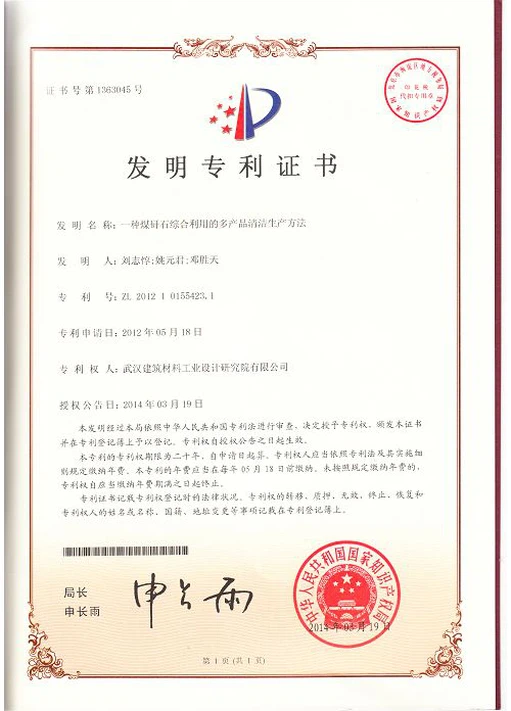
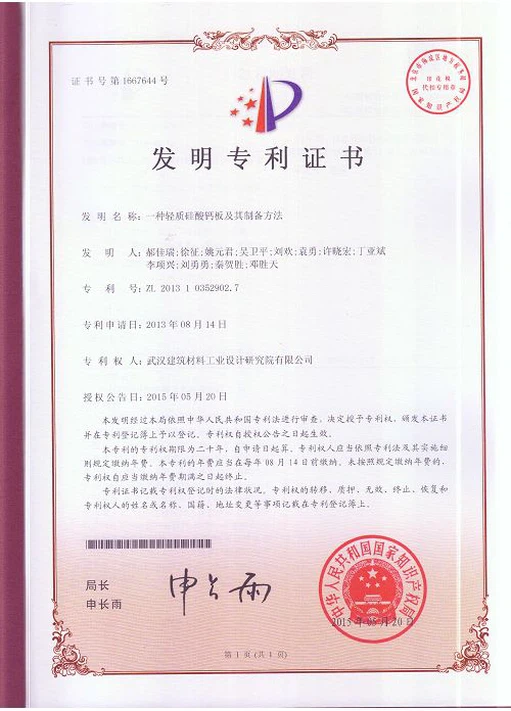
Certificate

FAQ
Q: How is cement board manufactured?
Q: How is FC sheet made?
Q: What are the materials in making fiber cement board?
Q: What is the difference between cement board and fiber cement board?
Q: What is an alternative to fiber cement board?
Q: What are the main components of cement board?
Q: Is fibre cement sheet sustainable?
Q: What kind of cement do you use for cement board?
Q: What is better than cement board?
Q: Can fiber cement board get wet?
Q: What is better cement board or backer board?
Q: What is the life expectancy of fibre cement sheets?
Different brands will have different expectations. For example, some companies say their fibre cement cladding will last for over 100 years if installed and maintained properly. Others say their product will last between 50 and 60 years. Fibre cement cladding is known for its durability.
Q: Is fibre cement sheet water proof?
Q: Is cement board termite proof?
Q: How thick is fiber cement board?
Q: Why does cement board crack?
Q: Can I use nails on fiber cement board?
Q: Does cement board need to be sealed?
Q: Do you need waterproofing over cement board?
Q: How do you finish where cement board meets drywall?
Hot Tags: fiber cement board production line, China fiber cement board production line manufacturers, suppliers, factory, New Building Materials, oil press machine commercial, , , sheet roll forming machine, Aerated Concrete Block Production Line
You Might Also Like


Send Inquiry