


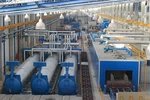
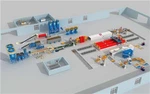


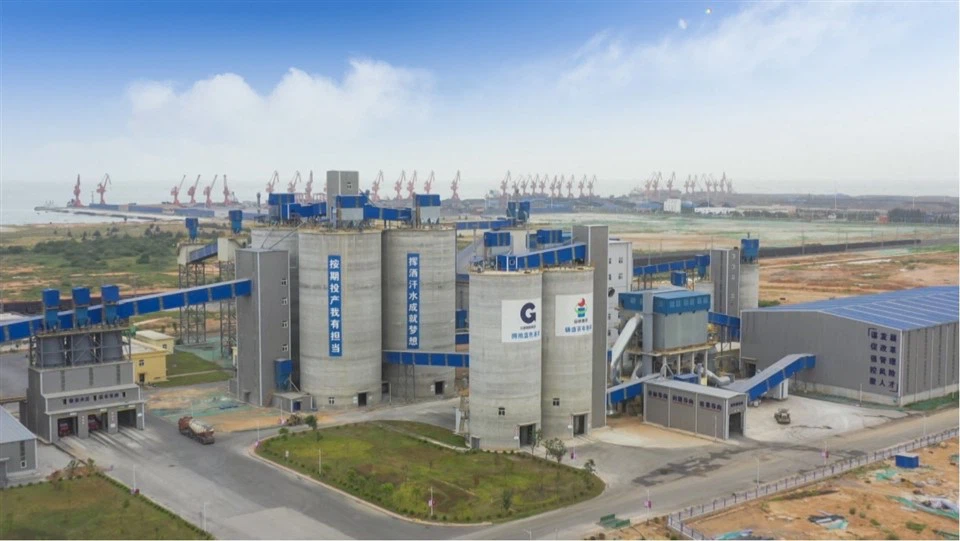
Fiber Cement Board Production Line
What is Fiber Cement Board Production Line
Fiber cement boards are composite materials made of sand, cement and cellulose fibers. More specifically, they are composed of Portland cement with glass-fiber mesh on the surface. These boards can be used independently or along with plywood. They are highly resistant to fire, water and termites, making them an ideal choice for building good quality and long lasting furniture and homes.
Why Choose Us
Commitment to Quality
We only use the highest quality building materials and have a product to meet any budget and to meet any specification for any project. We stand over all our material as well as our technical advice.
We provide a product guarantee on all our material.
Commitment to Service
We pride our selves on providing the highest quality service to our customers. From advising on the best solution to any repair, replacement or new build installation. We work hand in hand with our customers when they need any advice on a solution for any flatroof project.
Commitment to Value
Our products are not only the hightest quality in each price range, we also strive to ensure you will receive value for money. We work closely with the manufacturers of all our products to make sure our customers come back over and over again.


Advantages of Fiber Cement Board Production Line
Durability & Strength
Fiber cement boards are extremely strong and durable to withstand high levels of impact and stress, making them suitable for areas where heavy objects may be placed against the partition. In addition, they are resistant to warping, shrinking, and other impact damage. It means they are less likely to crack or break like traditional wood or drywall partitions, great for use in high-traffic areas.
01
Fire Resistance
Fiber cement boards are highly fire-resistant and have been classified as non-combustible by the National Fire Protection Association (NFPA). In other words, these building materials do not contribute to the spread of flames, which can help contain the fire and prevent it from spreading to other parts of the building. As a result, fiber cement boards are ideal for buildings where fire safety is a primary concern.
02
Moisture-resistance
Fiber cement boards are resistant to moisture, meaning they do not rot, swell, or warp when exposed to water. This makes them ideal for use in areas that are prone to moisture, such as bathrooms, kitchens, and laundry rooms. Moreover, fiber cement boards will not rot or warp when exposed to moisture and are less likely to harbor mold or mildew like wood and other materials, which can lead to health problems and unpleasant odors.
03
Insect Resistance
Fiber cement boards are also resistant to termites and insects and do not attract or provide a habitat for these insects. Thus, this makes them great for use in regions that are prone to termite infestations. Additionally, they are also less likely to be damaged by other pests, rodents, or birds, which can help prolong the lifespan of the partition.
04
Sound-insulation
Fiber cement boards have excellent sound-insulating properties, and they can help reduce noise levels within a building. Therefore, fiber cement boards are ideal for use in areas that require privacy or where noise levels need to be kept to a minimum.
05
How We Can Use Fiber Cement Board and Tips for Selecting Fiber Cement Board.
Ceiling
Fiber cement boards is one of the greatest options for ceiling application because it offers strength, durability and elasticity together. Their interesting and elegant styles and easy-to-use property also make them a great choice for ceilings. You can also install downlights and paint the boards as per your interest.
One of the keys of fiber cement ceiling is thin and light weight, which support to install easily for both concealed ceiling and exposed grid ceiling as well.
Flooring
There are two ways you can use fiber cement board for flooring:
The first way, fiber cement boards are used as floor underlay on which you can install laminate, parquet floor tiles and ceramic tiles for decorative and beauty purposes.
And the other way, you can also show off the bare texture of the board by cleaning its surface, applying primer onto the surface and then applying paint coats to prevent scratches.
These installations don't take a lot of time and offers high impact strength.
Interior and Exterior Wall
Currently, in modern house, reinforced concrete frame structure is used as main bearing structure; and the traditional way still being used is to use brick walls as a structure to divide the space and cover the building. With a large weight (up to 200kg / Square Metre ), brick walls will create a significant static load on the frame structure. Thus, not only the structure of reinforced concrete frame must be strengthened to be stronger, but the foundation of the building must also be larger, to be able to support the entire weight of the above structure.
Generally, the thickness of cement fiberboard is 5mm, 6mm, 8mm and other thicknesses. Buyers can customize it to the manufacturer according to their needs. The length is 2.44m and the width is 1.22m. It can also be cut to facilitate construction. Using cement and fiber as raw materials, it is an excellent fire-retardant and flame-retardant material after raw material blending, mold infusion, acceleration and deceleration curing at high temperature and high pressure.
The application positions of fiber cement boards with different thicknesses in engineering will also be different. For example, 6 mm thick fiber cement boards are often used for further processing into ceilings or wall decorative boards. In addition, according to different needs, the thickness of the fiber cement board used as curtain wall lining board, wall hanging board and external wall insulation board will be different. 24mm fiber cement board has greater strength, stronger performance in waterproof, frost resistance, fire resistance, high temperature resistance, sound absorption, heat insulation, etc. Currently, it is often used in steel structures to be used as LOFT loft slabs and wall partitions.
When choosing fiber cement board, in order to avoid the occurrence of corner cracking of the board, it is recommended to choose a board produced by a regular manufacturer. The integrity of the fiber cement board is better. The installation of the board is seamless and cracking, which makes the wall more moisture-proof. It directly saves the traditional wet working method of plastering, reducing and shortening the construction period, saving and lowering. Post-maintenance of fiber-fiber cement board.

Fiber cement boards get their water resistance from a treated gypsum core and the organic reinforced fiber covering.
Cement boards specially made with Portland cement core and fiberglass mat reinforcing is truly waterproof while the later is more suitable for moist settings.
Fiber cement boards made with Portland cement can be inserted into water without any risk of degradation. These panels do not even require sealing of edges and/or penetrations in order to maintain their structural integrity. Boards made of Portland cement are however smaller in size and heavier than boards with a gypsum core.
Fiber cement boards are ideally used for flooring, making furniture, for wall cladding/paneling and even for gates due to their indestructible properties. Unlike plywood Vboard does not degenerate and disintegrate in the rain due to moisture and does not attract termites.
Fiber cement sheets and boards can ideally be used in kitchens too, as they are considerably thermal resistant and do not catch fire easily.
Fiber cement sheets and boards also asbestos free which makes working with them less harmful. Health hazards are minimised for your family as well as those who help build your home.

Uses of Fiber Cement Board Production Line in Construction
Siding
Fiber cement board is commonly used as an alternative to vinyl or wooden siding. It provides a low-maintenance, rot-proof facade that can last 50 years or more. The board can be painted any color to match your home's style.
Trim
The trim around windows, doors, corners, and the roofline of a house is exposed to damage from weather. Fiber cement board trim is resistant to warping, cracking, and rotting. It creates a crisp, clean finish for your home's trim details.
Flooring
Fiber cement board can be used for patio flooring, walkways, and steps. Its strength and stability make it suitable for high-traffic, outdoor areas. The board can be tiled, painted, or stained for an attractive finish. For patios, the spacing between boards allows for drainage.
Roofing
As a roofing material, fiber cement board creates a durable, fire-resistant surface. It stands up well to hail, snow, and high winds. The board can be used for the entire roof or just in high-impact areas like the ridge cap. It provides an excellent base for roof tiles or shingles.
Interior Uses
Fiber cement board also works well for interior projects like wainscoting, flooring, countertops, and tile backer in bathrooms and kitchens. It is resistant to mold, algae, or moisture.
DIY-Friendly
Fiber cement board is easy to cut and work with using basic tools like a circular saw, jigsaw or utility knife. It creates a stable base for tile, paint and other finishes. For the do-it-yourselfer, fiber cement board offers an affordable alternative to poured concrete.
The uses of Fiber Cement Board Production Line are
External Cladding
Fiber Cement boards are used as external cladding materials for buildings. They are available in various textures. The cladding is extremely durable with excellent weather resistance properties.
Fire-Rated Partitions
The Fiber Cement Boards are non-combustible materials and have very good fire resistance properties. They are widely used to make fireproof partitions.
Substrate for Tiling
The boards are used as a substrate for tiling on the floors and walls. It is a very strong material having very good water resistance properties which makes it a good base for tiling.
Acoustic Properties
They have very good sound insulation properties.
Internal and External Lining
Fiber Cement boards are used as an internal and external lining material. The internal lining is suitable for plastering or for tiles to be laid on it. The external lining can be finished with paint or any other textures or cladding materials.
Water Resistance
They are used to waterproof certain areas.

What Is the Application of Fiber Cement Board Production Line?
Exterior Siding
Fiber cement board is as an ideal choice for durable and attractive siding. It can withstand harsh weather conditions while offering the design flexibility that complements any architectural style.
Roofing
When it comes to roofing, this board's resilience is unmatched. It can brave the harshest weather conditions, providing a reliable shield for your home.
Interior Walls and Ceilings
Fiber cement board isn't limited to the exterior. Its fire resistance and acoustic properties make it an excellent choice for enhancing indoor spaces. Creative interior designs using this board can transform any room into a work of art.
Wet Areas (Bathrooms, Kitchens)
This board's resistance to moisture makes it a good choice for areas like bathrooms and kitchens due to its moisture resistance. It ensures the longevity of these spaces while maintaining their aesthetic appeal.
Decorative Elements
Fiber cement board isn't just about functionality, it can also be a canvas for artistic expression. Its versatility allows for unique and artistic installations, such as cladding and paneling.
The flow-on process is a method of producing fiber cement products, which uses high concentration slurry to lay on the felt, and the slurry is subjected to vacuum filtration, dehydration, and extrusion molding for many times to form a green sheet of the product.
Characteristics of flow-on process:
● The equipment is relatively simple and lower cost
● Reasonable energy consumption and lower operation cost
● Easy operation and convenient maintenance
● Low adaptability of raw materials
● Low water consumption and low loss of raw materials
Fiber cement board is made of cement and wood fiber. Because of the materials, it is durable, fireproof, mothproof, light weight and frost resistant. For the characteristic of sound absorption and convenient construction, as new wall material of green decorative building promoted by the state, this product is applicable to steel and wood structure residential buildings, factories, housing renovation and activity rooms. The service life of fiber cement board is 50 years under normal use. For dimension, the standard dimensions are 3000mm*1220mm*10mm-26mm. At the same time, depending on the distances of the keel, this product can be supplied with different thicknesses and sizes. To be more precise, 10-19mm can be used as interior wall board and partition board and 19-26mm is applicable to the floors of the building.
There are many features of fiber cement board. Firstly, it has Grade A non-flammability which means that it is flame resistant to combustion at 800℃ and flameless at 1200℃. Secondly, it is weatherproof. To be more specific, it is resistant to deformation in wet, hot and dry conditions. As well as that, it can be used at -40 degrees and the rate out of shape in the condition of wet or dry is 0.26%. Thirdly, this product is also water and damp proof. After soaked in water for one month, the board still keeps intact and the phenomenon of swelling will not happen. In addition to that, this product will not disintegrate under these circumstances. Tests under ASTM G-21 prove fiber cement board is bug and mildew free because this product has no nutrient for fungus and insect. Another feature is insulation. On one hand, superior sound insulation factor of a wall built from the board ranges between 44dB and 47 dB and this test is performed by National Center for Quality Supervision and Testing of Fire Building Materials (NFTC). On the other, this product is also a superior heat insulator since it has a low thermal conductivity of 0.28 W/M2·k. With regard to environment protection, this product is pretty environmentally-friendly for the reason that it does not contain toxic ingredients, such as asbestos, formaldehyde, ammonia or benzene.
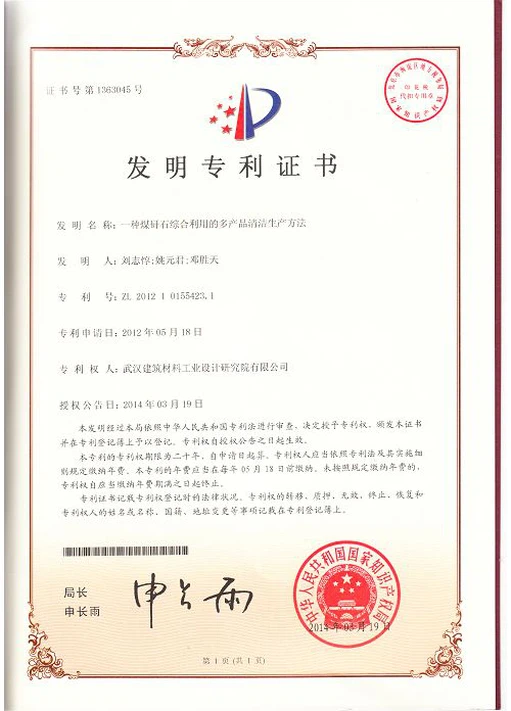
Certificate
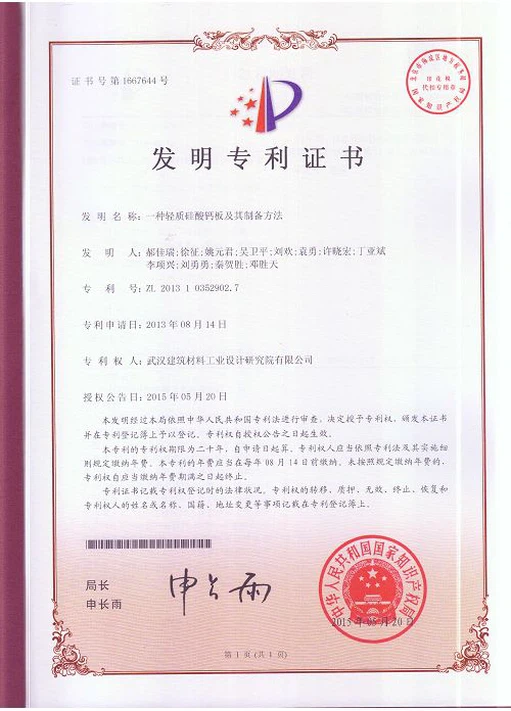
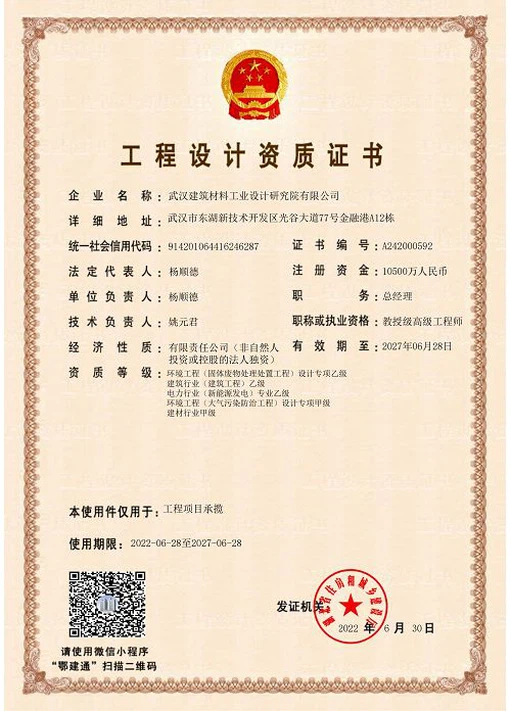
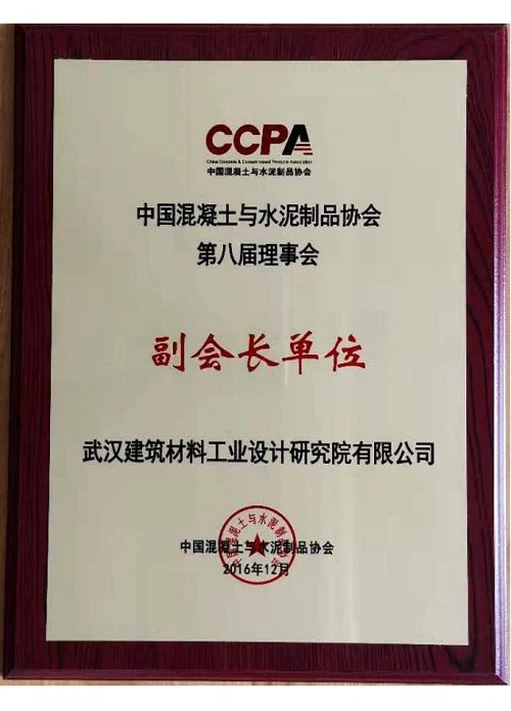
Obtained many national science and technology conference awards, provincial and ministerial engineering design and technical progress awards, etc., and own nearly 60 patents.


Our Factory
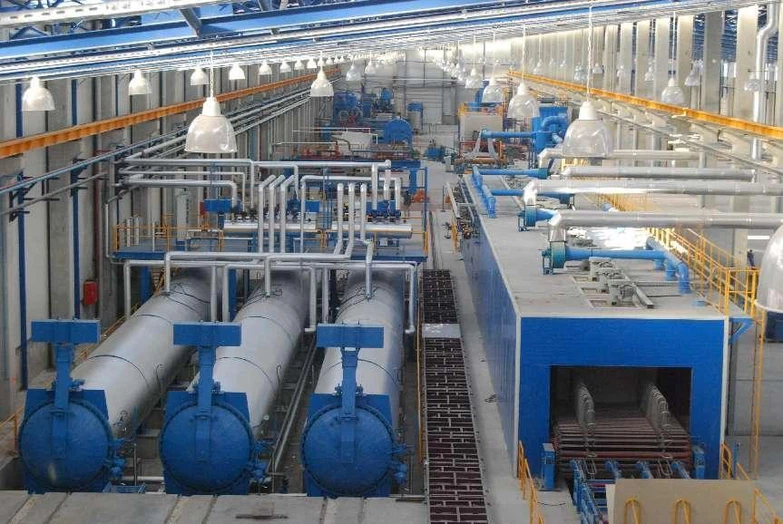
Wuhan Building Material lndustry Design & Research Institute Co., Ltd., subordinated to CNBM was established in 1965. lt is the leading company in fiber cement board / calcium silicate board machinery industry, and has sold more than 200 lines all over the world.The Company's design center has more than 200 engineers, who can give customers the most professional design. The Company also has modern laboratories to help the customers to choose the most suitable rawmaterials and production formula through the testing of raw materials and final products.

FAQ
Q: What is fiber cement board used for?
Q: What is fibre cement sheeting used for?
Q: How do you fasten cement fiber board?
Q: How do you waterproof cement board?
Q: What was the main problem with fiber cement board siding?
Since fiber cement contains concrete, Hardie siding is heavier than other sidings, making installation more difficult. The dense boards are cumbersome to transport, carry, and cut. Moreover, the precision required for proper Hardie installation is more than most DIY projects.
Q: Is fiber cement waterproof?
Q: Can fibre cement sheets get wet?
Q: Does fiber cement board warp?
Q: Can you bend fiber cement board?
Q: How do you maintain fiber cement board?
Q: What is an alternative to fiber cement board?
Siding Alternative #1 : Vinyl Siding.
Siding Alternative #2 : Wood Siding.
Siding Alternative #3 : Wood Based Composites.
Why is Everlast a Better Solution?
Q: What is better than cement board?
Q: What is better than fiber cement siding?
Q: Which is better gypsum board or fiber cement board?
Q: What is the difference between cement board and fibre cement board?
Q: Is fiber cement board termite proof?
Benefits of Fiber Cement Siding
Durable and low maintenance: Manufacturers offer some warranties lasting up to 50 years, a testament to the material's longevity. It's easy to care for because it holds up against rot, insects, fire, and inclement weather. Rot-resistant: Since it's water resistant, it resists rot.
Q: Is fiber cement board easy to cut?
Q: What thickness cement board should I use?
Q: What is the difference between cement board and backer board?
Q: What is not a benefit of fiber cement siding?
Hot Tags: fiber cement board production line, China fiber cement board production line manufacturers, suppliers, factory, Aerated Concrete Block Production Line, New Building Materials
Next
No InformationYou Might Also Like


Send Inquiry