


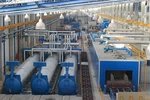
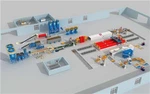


High Capacity Fiber Cement Production Line
Company Advantages
Advanced Equipment
Equipment based on the latest technological developments has higher efficiency, better performance and stronger reliability.
After-Sales Service
The professional and thoughtful after-sales team makes you worry-free after-sales. Intimate service and strong after-sales team support.
Rich Experience
Wuhan Institute has been deeply engaged in the Calcium Silicate board / Fiber Cement board industry for more than 40 years, so far, it has cooperated with many large group companies such as SHERA, Saint-Gobain, ASK, Conch Cement, etc., and has cooperated in more than 200 production lines in the world.
Professional Team
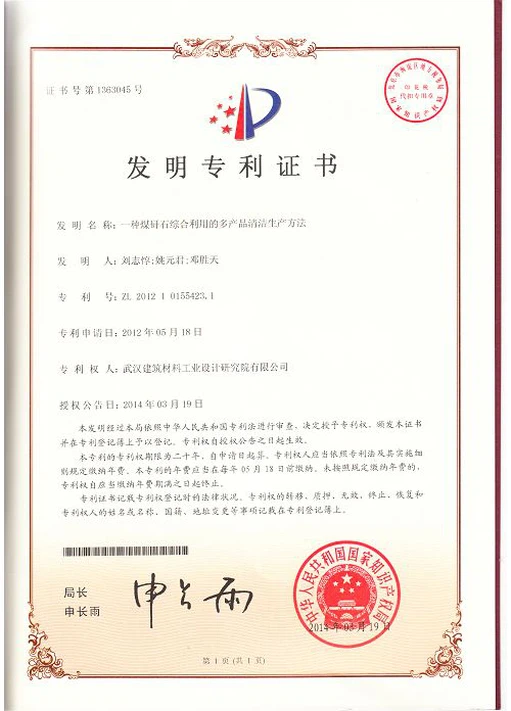
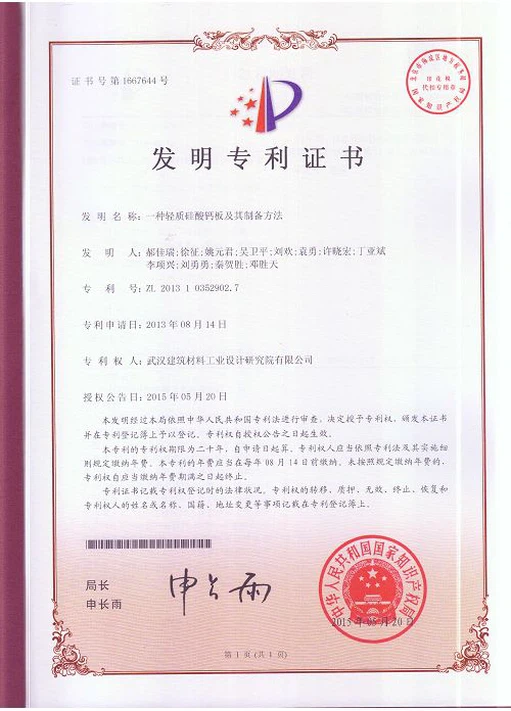
The company has a strong R & D and innovation capacity of equipment, with more than 60 patents and software copyrights, and has been certified as a national high-tech enterprise.
What is High Capacity Fiber Cement Production Line
Fiber cement is a composite material in which reinforcing materials such as polymer fibers or glass fibers are added to base materials such as cement and quartz sand. This material not only has good physical properties, such as strength, crack resistance, durability, etc., but also has toughness and plasticity, and can adapt to the needs of complex structures. Fiber cement, also known as glass fiber reinforced cement (GRC), can be used in fire retardant fields such as buildings, roads, bridges, and cable projects. In addition, fiber cement board is a kind of board made of cement as the basic material, adding mineral fiber or other fibers as reinforcing materials, and making it through pulping, molding, curing and other processes. It is suitable for construction needs in many fields.


Benefits of High Capacity Fiber Cement Production Line
Fire Resistant
Fiber cement cladding is fire resistant, giving homeowners in dry regions across the west coast peace of mind when it comes to wildfires.With a flame spread index of zero, fiber cement siding doesn't easily ignite or spread flames. Don't believe us? Read about one incredible, real-life example here.
Wind Resilience
In coastal regions, strong wind damage, sun exposure and salt spray is a concern for homeowners. Fiber cement offers"hurricane-resilience"as it can withstand up to 130 mph or higher winds.Fiber cement meets wind load code requirements in many coastal regions across the USA, including Miami-Dade wind load codes.To learn more about fiber cement wind-resilience, click here.
Humidity Resistance
Homeowners along southern, humid climates are concerned about damage caused by humidity, including mold and rot. Fiber cement can withstand high humidity without rotting or warping. This makes it a better alternative to other siding materials as it doesn't allow pests to infest the exterior of the house.
Temperature Resistance
Homeowners in northern climates, where temperatures vary significantly, can rest easy when they choose fiber cement siding for their homes. Traditional architectural concrete is susceptible to temperature cycles that create cracking damage due to freezing and expansion. Fiber cement is temperature cycle durable, meaning it won't crack, warp or otherwise damage during extreme temperature fluctuations.
What are the Applications of High Capacity Fiber Cement Production Line
Wall decoration
Fiber cement board has excellent water resistance, mildew resistance, fire resistance and other properties, and is suitable for indoor and outdoor wall decoration. Among them, fiber cement boards can also be surface carved, painted and printed to enrich the wall decoration effect, and are widely praised by designers and owners. At the same time, fiber cement boards are lightweight, high-strength, and easy to construct, making them a cost-effective wall decoration material in modern buildings.
Roofing materials
Fiber cement tiles not only offer the beauty and practicality of traditional roofing materials, but also offer excellent durability and fire resistance. Fiber cement tiles greatly reduce the weight of the roof and reduce the load-bearing capacity of the entire building, while having excellent thermal insulation properties and waterproof functions. Under the requirements of low cost and high performance, fiber cement tiles have become the mainstream of roofing materials.
Floor paving
Fiber cement flooring has received widespread attention because of its high compressive strength, flat floor, easy care, resistance to moisture, non-slip and waterproof. Fiber cement floors can be constructed by laying the floor, brushing the floor, or patching, and are especially suitable for large buildings such as shopping malls, hotels, and office buildings.
Other areas
Fiber cement can also be made into many building components of different shapes, such as fiber cement pipes, fire protection, flues, bridges, ship hulls and other large projects, as well as some works of art, municipal gardens, flood control and windproof walls, etc. The wide range of uses of fiber cement has promoted the continuous development of modern construction technology.
Reinforcement Fiber: Use chrysotile fiber, inorganic mineral fiber, organic synthetic fiber or cellulose fiber, single fiber or a mixture of multiple fibers as reinforcing fiber. Chrysotile asbestos should comply with the specifications of GB 8071.
Cement: Cement should comply with the specifications of GB 175.
Water: Mixing water that meets the requirements of JGJ 63 or return water that has been precipitated during the production of this product should be used.
Admixture: When producing low-density boards, an appropriate amount of lightweight inorganic admixture materials can be added.
Lightweight admixtures
An appropriate amount of lightweight inorganic admixture materials can be added when producing low-density boards.
Siliceous materials
For siliceous blended materials mixed in production, the SiO content should not be less than 50%, and the fineness should be 0.080mm square hole sieve and the sieve residue should be less than 15%.
Calcium materials
The CaO content of calcium blending materials mixed in production should not be less than 70%, and the fineness should be 0.080mm square hole sieve and the sieve residue should be less than 15%.
Large capacity fiber cement production line ingredients function
The Role Of Cement
As one of the main components of fiber cement boards, cement can be bonded with other components to form a strong bonding force, giving fiber cement boards high strength and strong bonding force.
The Role Of Fiber
Fibers can increase the strength and toughness of cement boards, effectively preventing them from deforming and cracking due to stress. At the same time, the fiber also has the functions of fire prevention and heat insulation.
The Role Of Fillers
Fillers can reduce costs, increase the hardness and density of cement boards, and also increase the heat resistance of cement boards.
The Role Of Auxiliaries
Additives can improve the process performance and performance indicators of cement boards, making them better adapt to the requirements of building materials, and improve the frost resistance, waterproofing and other properties of cement boards. For example, water reducing agents can improve the properties of concrete, plasticizers can make cement products more plastic, and Portland cement and magnesium oxide can improve the frost resistance and durability of cement boards.
High Capacity Fiber Cement Production Line Features
Good Heat Resistance: Fiber cement can still maintain stable performance in high temperature environments and will not deform or crack.
High Strength: Fiber cement is stronger and has higher strength than traditional cement materials.
Lightweight: Because fiber cement is made of lightweight aggregate, it is light in weight and easy to construct.
Corrosion Resistance: Fiber cement has excellent corrosion resistance and can be used for a long time in harsh environments such as acid and alkali.
Waterproof: Fiber cement has excellent waterproof properties and can be used for indoor and outdoor waterproofing and moisture-proofing.
6 Eco-Friendly Benefits Of Using High Capacity Fiber Cement Production Line
Lifespan
When comparing fiber cement to other siding materials like wood or vinyl, one of the first things you'll notice is the lifespan. Fiber cement goes above and beyond what other resources can provide by outlasting the competition. It can last for up to 50 years.The longer lifespan means residents won't need to replace and repair their siding as often. Instead, they can save money and produce less waste over the years. Routine checkups and repairs won't need to be done as often, resulting in cost savings.
Sustainability
Sustainability is a key factor when it comes to eco-friendliness. It's the main reason why fiber cement is becoming so popular. Regular cement requires a lot of water during production, while fiber cement relies on recycled materials and consumes fewer resources. With water crises in certain areas throughout the world, using materials that reduce water usage is necessary.Cement, sand, cellulose and recycled wood are the main components of fiber cement, making it a standout for sustainable building materials. Of course, natural siding materials like wood are eco-friendly, too, but only to an extent. Once they start breaking down, they're harder to recycle. In fact, the pieces are better off becoming part of the fiber-cement mix.
Versatility
If someone is hesitant about using fiber cement because they want to work with other materials, there's good news here. Fiber cement is the chameleon of siding materials. It can mimic other resources like stucco or wood, including grain patterns that look like the real thing.You can get them in a variety of designs, including panels, shingles or boards. Further, fiber cement works well with paint - both in the factory and on a building.
Resistance
Eco-friendly typically refers to how materials benefit the environment. In another sense of the term, though, fiber cement can help prevent weather-related damage. It can better withstand hail, storms, natural disasters and fires.Fiber cement is strong, sturdy and resistant to anything life throws at it. It can protect against even the harshest conditions, which leads to less out-of-pocket expenses for the homeowners. Bugs and animals that gnaw through materials like wood won't be an issue here - fiber cement resists it all.
Health
One subtle benefit of fiber cement is the neutral components that make it up. Other materials like vinyl may have volatile organic compounds (VOCs) due to their synthetic nature. These toxic compounds come from paints, sprays, preservatives, cleansers and plenty more products and materials that are common in households. These VOCs can affect human health negatively.For instance, VOCs can cause issues like headaches, nausea, asthma and ear irritation. Reducing materials that use VOCs is then necessary to create a safer environment. Avoiding these compounds altogether is key to good health, making fiber cement a good option.
Eco-Friendly Progress
In more ways than one, fiber cement is sustainable. Environmentally, financially and health-wise, this material helps consumers save money while reducing their impact on the environment and protecting their own health. As fiber cement solidifies itself as a viable option for buildings and siding, other materials must become more sustainable. If not, fiber cement will pull ahead as a beacon of progress for eco-friendly materials.
How to Maintain High Capacity Fiber Cement Production Line
Keep Dry
Large-capacity fiber cement production lines are very sensitive to moisture, so make sure the storage environment is dry. Fiber cement boards should be stored in a dry, well-ventilated area away from water or areas with high humidity.
Avoid Direct Sunlight
Prolonged direct sunlight exposure can cause high-volume fiber cement production lines to warp, crack, or fade in color. Therefore, they should be stored out of direct sunlight and can be protected using sun shields or shade nets.
Avoid Stress
Fiber cement should be protected from excessive stress during transportation and storage. Avoid stacking other heavy objects on the fiber cement board to prevent it from being squeezed and deformed.
Stacking Evenly
If multiple layers of fiber cement need to be stacked, make sure the stack is flat and stable, and use appropriate supports to separate each layer to avoid bending or deforming the panels.
Use Appropriate Packaging
If fiber cement needs to be stored for a long time, it can be wrapped in waterproof and moisture-proof packaging materials to increase its durability and protective properties.
Handle With Care
During transportation, handle it with care and avoid excessive friction or collision to avoid surface damage or corner wear.
Periodic Inspection
Regularly check the storage condition of fiber cement to ensure that there are no problems such as moisture, damage or deformation. If abnormalities are found, take timely measures to ensure quality and effectiveness.
Our Factory
Wuhan Building Materials Industry Design & Research Institute Co., Ltd. (Wuhan Institute) established in 1965, is a wholly-owned subsidiary of Sinoma Energy Conservation Ltd. which belongs to CNBM Group. The company is specializing in engineering consulting, engineering design, equipment manufacturing and general contracting for fiber cement board, aerated concrete and comprehensive utilization of mineral resources, solid waste disposal, gas waste treatment, new energy power generation and other energy-saving and environmental protection fields. The company has a registered capital of 105 million yuan, 400 employees, including 16 professor-level senior engineers, 70 senior engineers, 90 engineers with medium-grade professional title or above, and 310 technical staff with other majors.
Certificate

FAQ
Q: How is fibre cement manufactured?
Q: What are the raw materials for fiber cement?
Q: How long does fiber cement last?
Generally, quality vinyl siding can last 20-40 years, depending on its specific quality and the climate. Fiber cement siding, on the other hand, offers high durability and can last as long as 50 years.
Q: Does fiber cement crack?
Q: Is fiber concrete stronger than regular concrete?
Q: What is the process of cement production?
Q: Which raw material is needed for manufacturing cement?
Q: Is Allura as good as Hardie?
Q: Is Hardie board the same as fiber cement?
Q: Is fibre cement hazardous?
Q: What goes under fiber cement siding?
Q: What is better stucco or fiber cement siding?
Q: Is fiber cement waterproof?
Q: Does fibre cement absorb water?
Q: How often does fiber cement need to be painted?
Hardie Plank is also called fiber cement siding. While it's far heavier than aluminum, vinyl or wood, it is extremely durable and typically only needs a new paint every ten to twenty years for maintenance. It is one of the best materials and long-term solutions for protecting your home.
Q: Do I need rebar if I use fiber cement?
Q: Is fiber stronger than rebar?
Q: Does fiber concrete need mesh?
Q: Can you get silicosis from fiber cement?
Q: What are the four raw ingredients of cement?
Hot Tags: high capacity fiber cement production line, China high capacity fiber cement production line manufacturers, suppliers, factory, Efficient Sheet Forming Machine, Tote Stacker, fire resistance Fiber Cement Production Line, Precise control Flow on Sheet Forming Machine, Press Machine with Oil treatment System, High Capacity Fiber Cement Production Line
Previous
Stacking MachineNext
Stacking MachineYou Might Also Like


Send Inquiry