


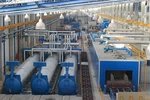
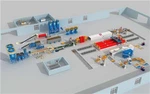


Stacking Machine
↵
Company Advantages
Advanced Equipment
Equipment based on the latest technological developments has higher efficiency, better performance and stronger reliability.
After-Sales Service
The professional and thoughtful after-sales team makes you worry-free after-sales. Intimate service and strong after-sales team support.
Rich Experience
Wuhan Institute has been deeply engaged in the Calcium Silicate board / Fiber Cement board industry for more than 40 years, so far, it has cooperated with many large group companies such as SHERA, Saint-Gobain, ASK, Conch Cement, etc., and has cooperated in more than 200 production lines in the world.
Professional Team
The company has a strong R & D and innovation capacity of equipment, with more than 60 patents and software copyrights, and has been certified as a national high-tech enterprise.
What is Stacking Machine
A palletizer is an automated equipment that is mainly used to stack products packed into containers, such as bags, cartons or boxes, on pallets or pallets in a certain arrangement for automatic stacking. It can usually be stacked in multiple layers. The palletizer is convenient for forklift transportation and warehouse storage. The palletizer usually consists of a mechanical arm and different types of grippers, which can be personalized according to the size and shape of different products to achieve efficient and automated palletizing operations.


Benefits of Stacking Machine
The palletizing machine has a large operating range, good safety performance, operates in a straight line, and only uses one motor, so the palletizing effect is very good.
The palletizing machine operates in an open environment. It has an independent linkage mechanism, and it uses a linear conveying path, so it is very stable and the transmission efficiency is also very high.
The palletizing machine uses linear guide rails, and the conveyor is also a belt-type standard part. If it is damaged, it is easy to purchase and replace.
There are many products of different specifications for palletizing machines, ranging from low to high speed, so the range of choices is also very wide.
Most parts of the palletizing machine are at the bottom, the arms are sensitive, and the power consumption is slow, which is energy-saving and environmentally friendly. And even in a high-speed operating environment, the reliability is very high.
There are various types of palletizing machines with complete specifications. They can be applied to work in a variety of environments, and their scope of application is also very wide.
What are the Applications of Stacking Machine
Pallet Stacking
Stackers excel at organizing pallets in high-density storage areas. They're capable of lifting pallets to significant heights, maximizing vertical space utilization.
Order Picking
With their excellent manoeuvrability and ergonomic design, stackers are ideal for order-fulfillment tasks. Operators can easily navigate through aisles, retrieve items from various shelving levels and transport them to the packing or shipping areas.
Loading And Unloading
Stackers are often used for loading and unloading goods from trucks, trailers and containers.
Types of Stacking Machine
Lift table stacking machine
The Lift Table Stacking Machine is designed to handle 5-15kg. Al.-Zn.-Mg. ingots at stacking speeds much higher than is possible with the Radial Arm stacker.Stacking speeds of up to 2200 ingots/hour are possible, dependent on the number of ingots/layer required.The standard design is suitable for building stacks of regular shaped ingots whose accumulated layer width is less than the overall length of the ingots.A standard duty machine consists of essentially 2-conveyors at 90º to each other; the first conveyor being an ingot receiving conveyor with the selective ingot turnover unit and incorporating at its junction end with the second conveyor the lift table stacking unit.
Radial arm ingot stacking machine
The Radial Arm Ingot Stacking machine can handle ingots between 450mm and 840mm long which can be either regular, eared, interlocking or 'T' shaped.It forms layers with all ingots the same way or will alternate ingots turned over, or with a combination of these arrangements. It can also alternate ingots end for end to achieve ingots interlocking when this is required.For forklift truck handling, it will position pairs of foot ingots, or leave voids in the stack. Stacks can be built with alternate layers at 90 degrees or with all layers having ingots running parallel or a combination of these two.The Radial Arm Stacker can be arranged to fit in with most existing plant layouts.
Gantry ingot stacking machine
This model in the"Worswick"range of Ingot Stacking Equipment is perhaps the most versatile and fully automated stacking unit yet produced. It is suitable to receive ingots from either an inline or rotary casting machine and can be'customised'to suit each individual application.It can be arranged in various different configurations from inline to right angle systems.
Zinc slab stacking machine
To compliment the WORSWICK range of stacking machines for regular shaped ingots, we developed specialised stackers dedicated to handling primary Zn. slab ingots which, together with our casting machines, enables a fully automated production facility to be offered.2-models of the Zn. slab stacker are available, a 'single head' version, as shown, suitable for production rates of up to 500 slabs/hour -equivalent to 12.5 t/h of 25kg. slabs and a twin head version, also shown suitable for production rates of up to 1,000 slabs/hour-equivalent to 25 t/h of 25kg. slabs.
Components of Stacking Machine
Main Structure
The main structure of the stacker mainly consists of an upper beam, a column, a lower beam, and a control cabinet support. The upper and lower crossbeams are welded into a box shaped structure by steel plates and section steels, with good cross-sectional performance. The running wheel axle holes on both sides of the lower crossbeams are clamped and processed in one step by a floor type boring and milling machine, ensuring the parallelism of the axes of the driving and driven wheels, thereby improving the stability of the entire machine's operation; The column is made of square steel pipes. Two flat steel rails are welded on both sides of the square steel pipes at one time. The surface of the rails is hardened and has good wear resistance.
Loading Dock
The cargo platform is a component that moves vertically up and down through the power traction of the lifting mechanism. It is an L-shaped structure welded by a vertical frame and a horizontal frame. The vertical frame is used to install the lifting guide wheel and some safety protection devices. The horizontal frame is made of seamless steel pipes, fully meeting the requirements for carrying cargo.
Horizontal Running Mechanism
The horizontal running mechanism is composed of a power drive and a set of active and passive wheels, which is used for running the entire equipment roadway direction.
Lifting Mechanism
The lifting mechanism is composed of a drive motor, a drum, a sliding group, and a steel wire rope, used to lift the cargo platform for vertical movement.
Fork Mechanism
The cargo fork telescoping mechanism is a mechanism composed of a power driven upper, middle, and lower fork, which is used for the movement of cargo perpendicular to the direction of the roadway. The lower fork is fixed on the loading platform, and the three forks are linearly retracted through chain transmission.
Guide Wheel Device
The stacker adopts three sets of guide wheel devices: upper and lower horizontal guide wheels and lifting guide wheels. The upper and lower horizontal guide wheels are installed on the upper and lower crossbeams respectively, which are used to guide the stacker to move horizontally along the roadway direction. The lifting guide wheel is installed on the platform and moves up and down along the column guide rail to guide the vertical movement of the platform. At the same time, the load is supported by the guide wheel and transferred to the main structure.
Stacking Machine Features
Simple structure and few parts. Therefore, the parts failure rate is low, the performance is reliable, the maintenance is simple, and the required inventory parts are small.
Small footprint. It is conducive to the layout of the customer's factory production line and can leave a larger warehouse area. Stacking robots can be set up in small spaces and can be used effectively.
Strong applicability. When the size, volume, shape, or tray size of the customer's product changes, only slight modifications need to be made on the touch screen, which will not affect the customer's normal production. Replacing mechanical palletizers is cumbersome or even impossible.
Low energy consumption. The power of a mechanical palletizer is generally about 5KW for 26 KW palletizing robots. Greatly reduces customers' operating costs.
All controls can be operated on the control cabinet screen, and the operation is very simple.
Just locate the grabbing point and placement point, and the teaching method is simple and easy to understand.
Mode of Operation
According to the way of working, stackers are divided into 3. These are; manual stacker, semi-powered stacker and full battery stacker. The way of working; It is directly related to how intensive the stacker can work. Manual stacker preference in intensive work tires the operator and can slow down the work process. For this reason, when choosing a stacker, it is necessary to pay attention to the way of working first. For light loads, short distances and infrequent use range, manual or semi-powered stacker should be preferred, while for heavy loads or long distances, full battery stacker should be preferred.
Load Capacity
The payload capacity of the stacker is a critical factor affecting your operations. Determine the load capacity you need. When considering the load capacity, knowing that the load capacity will decrease as the lifting height increases, which is the working principle of stackers, will be your important key point when choosing. If you determine how much load you need to put the heaviest load on high shelves, it will be easier for you to choose a model.
Area Of Use
Stackers work on flat surfaces such as epoxy floor, wiped concrete and asphalt. You cannot work with stackers on dirt floors or ramps. Another important point you should pay attention to in the area of use is whether you will work in narrow corridors or in large warehouse areas. The features we have mentioned are important points about the area of use that will allow you to choose a stacker or forklift. There should not be a rail shaft or set-shaped pit in the door thresholds, these obstacles can damage your wheels and gearbox.
How To Use
Decide how to use the stacker. Although the stacker is generally preferred for lifting loads to high places, some businesses prefer stackers for transport purposes only. You need to determine well for which purpose you will use it. However, do not forget that it is used for both purposes. The important thing here is the percentage of use. The battery powered stacker is more expensive than the battery powered pallet truck, if you have more transport work and less shelf placement work, you can make your operation more efficient with an additional battery powered pallet truck.
Pallet Type
Although standard euro pallets are often used in businesses, determine which type of pallets you will use. Standard pallets or specially designed pallets? The stacker must be suitable for the pallet type. Because stackers are divided according to pallet types. There are also stackers with adjustable fork width.
Manoeuvrability
Manoeuvrability includes the stacker's ability to navigate in tight spaces and the ability to place loads precisely. Narrow aisle stackers can often manoeuvre effectively in limited warehouse spaces, which allows flexibility in warehouse organisation. Manoeuvrability can significantly impact operational efficiency by increasing mobility within the warehouse. If you want to lift transfer or heavy loads on high shelves, you should choose models with a large floor projection for occupational safety.
How to Maintain Stacking Machine
Regularly Inspect Your Racks
Maintaining your stacking machine means regularly inspecting your racks for damage and other potential problems. Set aside some time to closely examine your racks. Try to keep your racks as clean and as dry as possible. Examine all parts of the rack, including columns, base plates, individual shelves, row spacers, structural frame ties, column connectors, locking mechanisms and accessories. Be on the lookout for breaks, splinters, rust and other signs of decay. Repair or replace your racks before these issues become more serious.
Make Sure Your Racks Are Level
You also need to make sure your stack racks are level. If your shelves or stands are bent or warped in any way, this could be a sign of more serious issues and may indicate a decline in the structural integrity of your racks.
Keep Your Facility Organized
Accidents, traffic jams and other mishaps are bound to happen from time to time in your warehouse or storage facility. But you can prevent these kinds of incidents from happening by keeping your facility organized. Keep aisles and pathways clear so your employees can move throughout the space and find what they need without knocking into your stack racks or damaging your merchandise. Make sure your facility is well lit so your employees can see where they're going and navigate through the space safely.
Monitor the Layout of Your Facility
Monitoring the layout of your facility will help you prevent unforeseen accidents that can damage your stack racks and other storage containers. Analyze how your employees tend to move throughout the space and rearrange the space accordingly to make sure your racks aren't in the way. If your employees regularly bump or run into your racks, you might need to rethink the layout of your facility.
Tips for Cleaning Stacking Racks
Remove Debris And Dust
Dust and debris should be removed from stacking pallet racks on a regular basis to avoid corrosion, obstructions, and accidents.
Clean With Appropriate Chemicals
Dirt, dust, and debris can build up on stacking racks over time. Corrosion or other damage to the racks may result from using an acidic or alkaline cleaning solution. Because of this, it's crucial to employ a cleaning solution endorsed by the manufacturer.
Use Proper Equipment
Tools like brooms, brushes, and pressure washers may make quick work of cleaning the pallet racks.
Schedule Regular Cleaning
Clean pallet racks on a regular basis to keep them looking nice and to find any problems early so they can be fixed. Cleaning should be a frequent component of the routine at any warehouse or storage facility.
Our Factory
Wuhan Building Materials Industry Design & Research Institute Co., Ltd. (Wuhan Institute) established in 1965, is a wholly-owned subsidiary of Sinoma Energy Conservation Ltd. which belongs to CNBM Group. The company is specializing in engineering consulting, engineering design, equipment manufacturing and general contracting for fiber cement board, aerated concrete and comprehensive utilization of mineral resources, solid waste disposal, gas waste treatment, new energy power generation and other energy-saving and environmental protection fields. The company has a registered capital of 105 million yuan, 400 employees, including 16 professor-level senior engineers, 70 senior engineers, 90 engineers with medium-grade professional title or above, and 310 technical staff with other majors.
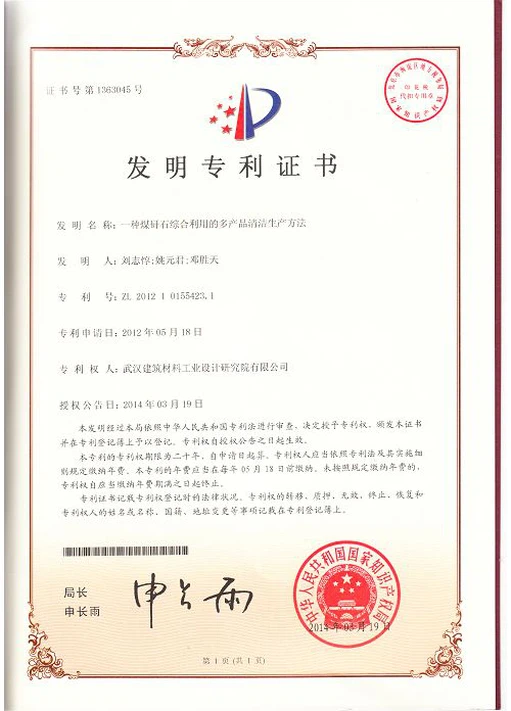
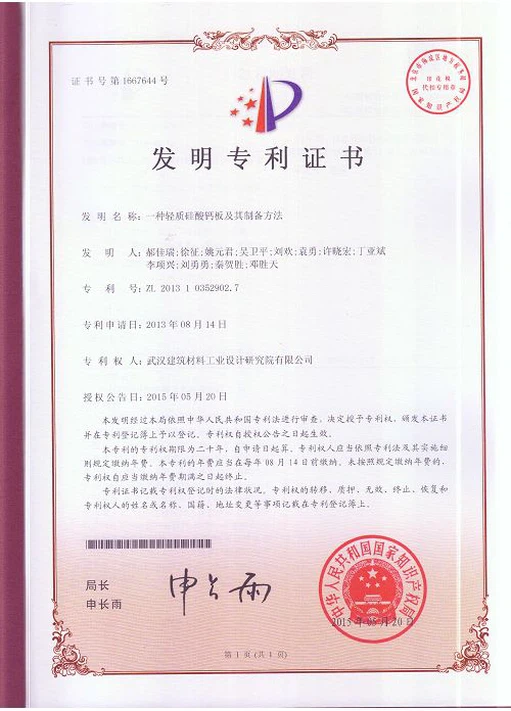
Certificate

FAQ
Q: What is stacker machine?
Q: What is the purpose of a stacker?
Q: What is the difference between a spreader and a stacker?
Q: What are the different types of stacking?
Q: What is proper stacking?
Q: Is a stacker the same as a forklift?
Q: What is a load stacker?
Q: What does a pallet stacker look like?
Q: What is the difference between stacker and reclaimer?
Q: What are the safe stacking practices?
Q: What is the Chevron stacking method?
Q: What is the difference between a pallet truck and a stacker?
Q: What is the difference between a stacker and a reach truck?
Q: What is a stacker feeder?
Q: What is horizontal stacking?
Q: What is block stacking?
Q: What is stack push and pop?
Q: What are the two primary operations performed on a stack?
Q: What does stack mean slang?
Q: What is a stacker equipment?
Hot Tags: stacking machine, China stacking machine manufacturers, suppliers, factory, durable Fiber Cement Production Line, Precise control Flow on Sheet Forming Machine, auto stacker machine, Automatic tray destacker, Furniture destacker and Sorting System, Easy operation Sheet Forming Machine
You Might Also Like


Send Inquiry