


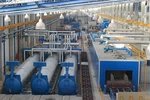
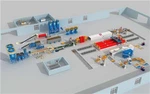


Stacking Machine
Wuhan Building Material lndustry Design & Research Institute Co., Ltd., subordinated to CNBM was established in 1965. lt is the leading company in fiber cement board / calcium silicate board machinery industry, and has sold more than 200 lines all over the world.The Company's design center has more than 200 engineers, who can give customers the most professional design. The Company also has modern laboratories to help the customers to choose the most suitable rawmaterials and production formula through the testing of raw materials and final products.
Why Choose Us
Factory Strength
Wuhan Building Material lndustry Design & Research Institute Co., Ltd., subordinated to CNBM was established in 1965. lt is the leading company in fiber cement board / calcium silicate board machinery industry, and has sold more than 200 lines all over the world.
Rich Experience
Wuhan Institute has been deeply engaged in the Calcium Silicate board / Fiber Cement board industry for more than 40 years, so far, it has cooperated with many large group companies such as SHERA, Saint-Gobain, ASK, Conch Cement, etc., and has cooperated in more than 200 production lines in the world.
Professional Team
400 Employees, including 16 professor-level senior engineers, 70 senior engineers, 90 engineers with medium-grade professional title or above, and 310 technical staff with other majors.
Quality Control
The Company also has modern laboratories to help the customers to choose the most suitable rawmaterials and production formula through the testing of raw materials and final products.
Related Product

High Capacity Fiber Cement Production Line
Fiber cement/calcium silicate board, is a kind of board made from inorganic mineral fiber or cellulose fiber, silicon and calcium materials whose technic process is :slurry preparing, sheeting, curing.

Flow-on process is one of the techniques to form the fiber cement sheet.
Density of material slurry will be higher for Flow-on process compares to Hatcheck process.
Machine configuration is simpler, operation and maintenance work are relatively easier compares to Hatcheck process. Flow-on process is suitable for produce high quality boards.

Hatschek Sheet Forming Machine
Good uniformity of green sheet thickness
Good surface appearance and smoothness
Advanced material level and concentration control system ensure less recycled water and provide higher efficiency.

Press Machine with Oil-treatment System
The press is equipped with guide rail lifting device or roller conveyor with lifting, which can be embedded in the conveyor line. For its simple layout,it is applicable to the design of new production line or the transformation of old plant under various working conditions.

Accurate thickness measurement, strong ability to identify chipped corners, rotten edges, color differences and dark cracks on the surface of the plate.

According to the visual inspection and thickness inspection results of the previous section, automatic detection of defects/defects is realized, and the inspection results are transmitted to the robotic arm system to complete the automatic grading and stacking of sheets.
A palletizer is an automated equipment that is mainly used to stack products packed into containers, such as bags, cartons or boxes, on pallets or pallets in a certain arrangement for automatic stacking. It can usually be stacked in multiple layers. The palletizer is convenient for forklift transportation and warehouse storage. The palletizer usually consists of a mechanical arm and different types of grippers, which can be personalized according to the size and shape of different products to achieve efficient and automated palletizing operations.
Benefits of Stacking Machine
Maximum Space Utilization
At present, it is the most important of benefits associated with a pallet stacker. If you don't have a pallet stacker in your arsenal of material handling equipment and depend solely on the capabilities of your workforce, then chances are that you are not utilizing the warehouse space to its maximum. There are chances that you must be missing out on high, vertical stacking storage which cannot be reached without assistance of equipment. Electric Stackers have adjustable pallet holding forks that have an excellent vertical reach.
Operator Comfort
Often the most overlooked benefit but an extremely important one for warehouse productivity. It can be a challenge for workforce to constantly stack heavy equipment, pallets, and boxes and deliver continuous performance. However, when they have an electric stacker as a companion, the management will be able to reap benefits of a reinvigorated workforce. They also come in ride-on and pedestrian variant for operation flexibility.
Versatility
An electric stacker not just assists in accessing heights and enable high-shelve stacking, but they also help in transportation of goods over long and short distances. This helps in enhancing the shop floor efficiency and process significantly.
Easy Manoeuvrability
This is one of the most critical of benefits for those warehouses and facilities that operate in confined spaces and multiple racks. Without specialist equipment like a stacker, movements in such spaces become a challenge for the workforce especially with loads. Although, it's taller equipment, they can even easily manoeuvre even the tightest of aisle at the corners.
Types of Stacking Machine
Manual stacking machines are vehicles that facilitate the loading, unloading, and transportation of products stacked on pallets. These machines, operated by human strength, use hydraulic pumps for horizontal and vertical movements. Manual stacking machines, which are fundamental tools in warehouse operations, find extensive use across various industries.
A semi-electric stacking machine is a vehicle used for transporting loads from one place to another in factory and storage areas through an operator's control, and lifting and lowering operations are powered by hydraulic pumps using electrical energy.Semi-electric stacking machines, designed to meet the complex needs of factories and storage areas, perform transport and lifting operations under the control of an operator. These machines combine the power of hydraulic pumps with electrical energy to safely transport and stack loads. Differing from fully electric pallet jacks, semi-electric stacking machines are capable of not only transporting but also loading and unloading tasks efficiently and flawlessly.
Stacking machines, also known as "stacker machines," are used across a wide range of applications, from industrial facilities to warehouses, to lift, lower, and perform horizontal-vertical movements for various loads. These machines are developed with the aim of making work processes more efficient. Stacking machines are categorized based on usage areas and technical specifications: powered stacking machines, semi-powered stacking machines, and manual stacking machines.Each category is designed and produced to address unique needs, thus achieving a balance between price and performance. Powered stacking machines are machines in which all movements are powered by motor. Semi-powered stacking machines, on the other hand, are vehicles where some movements are powered by hydraulic pumps and others by battery power.
Machines designed to effectively meet transportation and stacking needs are referred to as fully electric stacking machines.These specialized machines are used for purposes such as transporting, stacking, and placing loads on high shelves, thus optimizing work processes.Fully electric stacking machines are designed for various usage scenarios. They come in models that can be operated by an operator, powered by batteries, and also in motorized electric forklift models that the operator can use while sitting down, which can work with various fuel types.These machines are capable of transporting loads in both horizontal and vertical positions through the forks that go underneath the products.
Coil stacking machines are specially designed machines for effectively transporting and stacking coils. In the manual model, forward-backward and up-down movements are carried out manually. However, the up-down movement can be automated through electricity to create a semi-electric model.These machines are developed to increase efficiency in coil transportation and stacking operations. They find widespread use in warehouses, chemical plants, wire production workshops, yarn and weaving factories, among others.
Application of Stacking Machine
01
Pallet Stacking
Stackers excel at organizing pallets in high-density storage areas. They're capable of lifting pallets to significant heights, maximizing vertical space utilization.
02
Order Picking
With their excellent manoeuvrability and ergonomic design, stackers are ideal for order-fulfillment tasks. Operators can easily navigate through aisles, retrieve items from various shelving levels and transport them to the packing or shipping areas.
03
Loading And Unloading
Stackers are often used for loading and unloading goods from trucks, trailers and containers.
Stacking Machine Components
Driving Device
The driving device is the power source of the equipment, and the performance of the driving device will directly affect the performance of the whole machine. For this reason, our company selects a motor with superior performance, the motor protection level is IP54, and the insulation level is F level. The motor complies with the IEC standard, and the power supply is 380V AC/3PH/50 Hz.
Filtrate Tank
The filtrate tank is welded by plates and is used to collect the filtrate filtered by the main body of the stacked screw. The filtrate tank is connected with the frame body by screws, and flanges are provided on the side of the filtrate tank to connect with external equipment. .
Mixing And Stirring
The mixing system is mainly used to fully mix the sludge and the medicament to form alum, which is then fed into the main body of the snail for dewatering.
Self-cleaning System
Self-cleaning: The rotation of the screw shaft pushes the moving ring to continuously roll. The equipment relies on the movement between the fixed ring and the moving ring to complete successive self-cleaning processes, and then wonderfully avoids the common blocking problem of traditional dehydrators.
How to Choose Stacking Machine
Size
One of the most fundamental questions is aisle width. "Unless the stacker's dimensions are small enough to operate in the space available, its other qualities are irrelevant. Pedestrian stackers are the most compact of all, but it's worth noting that a stand-on stacker needs less aisle width than a platform stacker with its platform deployed. Sit-on stackers need wider aisles than the others."
Walk, ride or sit
To determine whether walking, riding or sitting will be most effective, looks at the typical distance travelled per transport movement and the frequency of such movements. "If the distance is less than, say, 25 or 30 metres, and the turnover of pallet loads is low, a pedestrian model will be fine. For occasional longer travel, some pedestrian stackers have a fold-down riding platform.
Capacity and performance
While some applications require limitations on drive and lift speeds, to avoid damaging vulnerable goods and facilities, others welcome faster performance. Stand-on and sit-on stackers are generally the fastest and most powerful, but you should check and compare the maximum speed figures for all types.
Initial lift and straddle
Another factor affecting stacker choice is the nature of your floor. If it is rough or uneven, or if it includes ramps, you need an initial lift model. This gives greater ground clearance by raising its load legs. Some of these trucks can be used to carry two pallets simultaneously, with one on the load legs and one of the forks.If your business uses bottom-boarded pallets, you will need a stacker with straddle legs. These widely separated load legs go around the sides of the pallet, instead of under it, leaving the forks free to lift from ground level. They are also useful for extra-wide loads.
How does a Stacking Machine work?
A stacker machine works almost in the same way as a Forklift does. For example, both have forks that are used to lock into pallets that are holding other materials, and when locked into place the forks lift the pallets. Although this lifting motion is achieved through the use either of a winch or a hydraulic pump, this technology can be used in more than one way.
For example, in manual hydraulic stacker machines, you can raise the forks off the ground by giving an activated lever a little pump. Safe and secure with a sealant that keeps them in place, these types of models can easily get the job done.
However, there are also Winch operated pallet stacker machines. They are operated – not that surprisingly – by the turns of a winch that are attached to sturdy wire cables or special link chains. All in all, this means that that a winch operated stacker machine can lift more loads than a manual hydraulic machine. This is worth bearing in mind when picking out the stacker that best suits your warehouse. If you have stock located in tricky positions or high hourly quotas, this may be the type of stacking solution for you. Some are even fitted with special breaks that prevent an accidental lowering of the goods, keeping both you, others around you and the machine itself, safe.
How to Maintain Stacking Machine
Before each operation of the palletizing system, the operator should check whether there are screws loosening, circuit aging, connection file slipping, belt cracking and other problems. If there is any problem, it should be solved immediately to prevent any failure during operation.
Clean up smart palletizing robots in time. The smart palletizing robot should be carefully cleaned before leaving work every day and wiped clean with a dry rag. If it is difficult to clean with a rag, you may as well use a brush.
The tooth belt and reverse connection equipment of the automatic palletizing system have a service life, and should be replaced immediately after the expiration to prevent hidden dangers.
See if the lubricating oil still works. After the robot stacker works for 3 months, it is necessary to check whether the lubricating oil of the vacuum pump is dirty or less. If it is dirty, replace it in time; If there is less, make it up as soon as possible.
In the workplace, corrosive liquids should be prohibited to prevent the metal manipulator from being corroded. When the circuit control board fails, it should be stopped immediately for inspection.
The bottom surface of the intelligent palletizing robot should be used reasonably. All four sides of the robot stacker can be used. For example, if your floor is uneven, four silicone MATS can be adjusted to level the robot stacker.
Some robot stackers will have high temperature cloth scrolls on them, which will absorb heat. If the reel is burned, it should be replaced immediately.
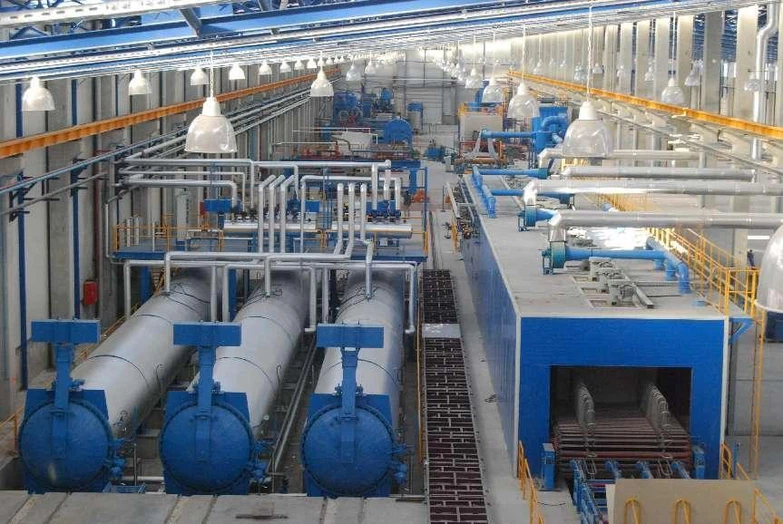
Our Factory

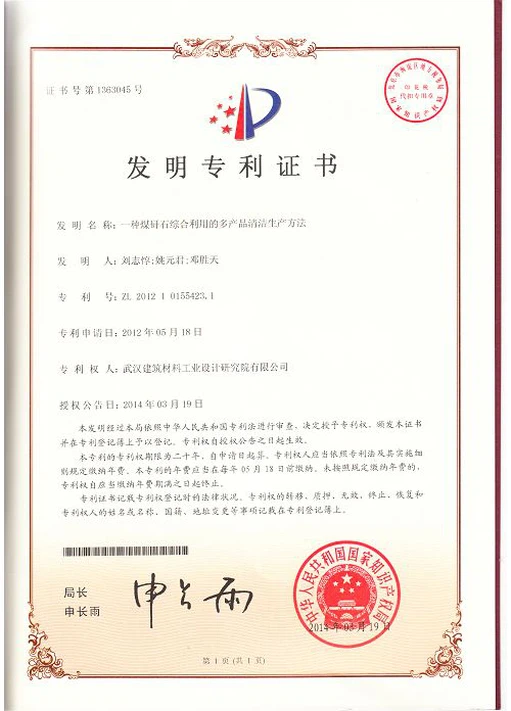
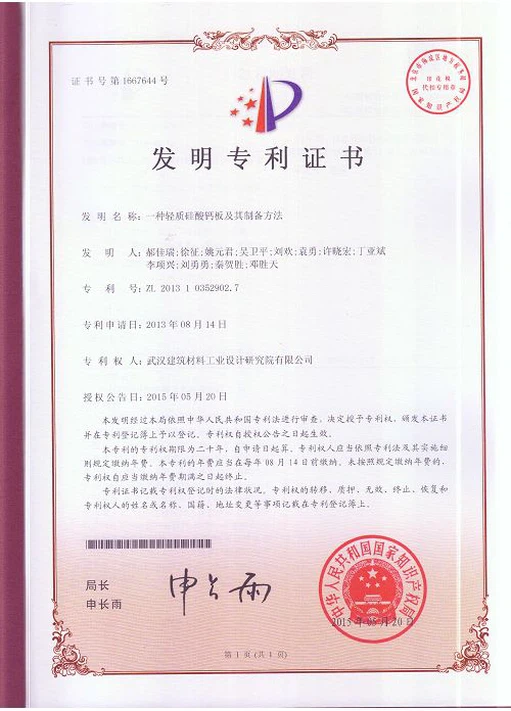
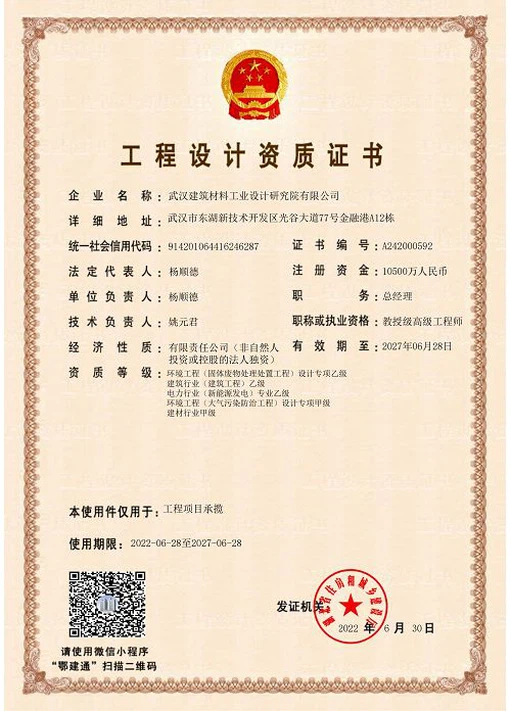
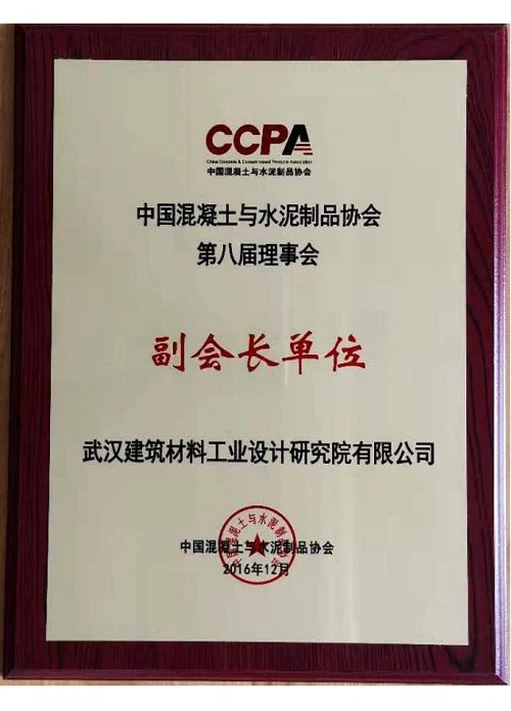
Certificate


FAQ
Hot Tags: stacking machine, China stacking machine manufacturers, suppliers, factory, durable Fiber Cement Production Line, sheet metal press forming, Machinery and Electrical Equipment Manufacture, integrated Destacker and Sorting System, advanced Sheet Forming Machine, Press Machine with Oil treatment System
Previous
Flow-on Sheet Forming MachineNext
Stacking MachineYou Might Also Like


Send Inquiry