


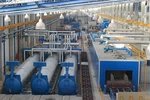
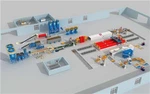


Steel Slag And Slag Treatment
Company Advantages
Advanced Equipment
Equipment based on the latest technological developments has higher efficiency, better performance and stronger reliability.
After-Sales Service
The professional and thoughtful after-sales team makes you worry-free after-sales. Intimate service and strong after-sales team support.
Rich Experience
Wuhan Institute has been deeply engaged in the Calcium Silicate board / Fiber Cement board industry for more than 40 years, so far, it has cooperated with many large group companies such as SHERA, Saint-Gobain, ASK, Conch Cement, etc., and has cooperated in more than 200 production lines in the world.
Professional Team
The company has a strong R & D and innovation capacity of equipment, with more than 60 patents and software copyrights, and has been certified as a national high-tech enterprise.
What is Steel Slag and Slag Treatment
Steel Slag and Slag Treatment, also known as Blast Furnace Slag, has virtually a 100% utilization rate globally. Its wide range of applications include as an aggregate for concrete and asphalt mixtures, Portland clinker, material for civil engineering works, and ground improvement material.Steel slag, on the other hand, is produced when impurities are separated from molten steel in a Basic Oxygen Furnace (BOF) or an Electric Arc Furnace (EAF). It has a significantly lower utilization rate than iron slag, and consequently is often sent to landfill. Its applications include use as an aggregate base, as well as use in embankments, shoulders, and asphalt.



Benefits of Steel Slag and Slag Treatment
Durability
Steel slag is a hard, dense material that is resistant to wear and damage. This makes it an ideal choice for use in construction, where it can be used as a base material or as a surface layer.
Strength
Steel slag has a high compressive strength, which means it is capable of supporting heavy loads. This makes it suitable for use in foundations, roadbeds, and other load-bearing applications.
Low Cost
Steel slag is often less expensive than other construction materials, such as concrete or asphalt, which makes it an attractive option for builders and contractors.
Environmental Benefits
Using steel slag in construction helps to reduce the amount of waste generated by steel production, as it repurposes a material that would otherwise be discarded. Steel slag is also a more sustainable choice than some other materials, as it requires less energy to produce and has a lower carbon footprint.
Chemical Stability
Steel slag is resistant to chemical attack, which makes it suitable for use in environments where there may be exposure to acids or other corrosive substances. This makes it an ideal choice for use in industrial or waste management facilities.
What is Tthe Application of Steel Slag In Building Materials?
The application of steel slag cement
Steel slag slag cement (referred to as steel slag cement) is based on steel slag, granulated blast furnace slag as the main component, adding an appropriate amount of Portland cement clinker and gypsum, grinding to make hydraulic cementing material. Because steel slag cement is based on steel slag and granulated blast furnace slag as the main raw materials, the production of this product can save limestone gaps, save energy, reduce CO2 and soot pollution to the environment, so it can also be called "green cement". The steel slag cement prepared by adding 10% steel slag powder into the cement clinker has higher flexural strength and compressive strength than ordinary cement. Steel slag cement not only has the same physical properties as ordinary Portland cement, but also has a series of characteristics such as high late strength, high folding strength, good permeability resistance, good wear resistance, micro-expansion, low heat of hydration, corrosion resistance and so on.
The use of steel slag powder as an admixture
Experimental studies have shown that after adding steel slag powder or composite steel slag powder to concrete, the bending strength becomes higher, the wear resistance becomes better, and the working performance of newly mixed concrete can be improved. In particular, it can reduce the occurrence time of hydration heat peak and delay peak, and the effect is more obvious with the increase of dosage. In addition, the concrete made of steel slag micro-powder has the characteristics of micro-expansion, which can compensate for shrinkage and reduce the dry shrinkage of concrete in the later stage, and can be widely used as a high-performance cement concrete admixture, which can significantly improve the physical and chemical effects of concrete such as folding strength, wear resistance, hydration heat and dry shrinkage performance.
Types Of Steel Slag And Slag Treatment
Acid Steel Slag
Acid steel slag is mainly composed of a mixture of non-metallic oxides and silicates formed after oxidation during steelmaking. It is rich in silicate as the main component and contains less carbon and alumina. Acidic steel slag mainly originates from the converter smelting process of steelmaking. It is characterized by its lighter color, yellowish or gray color, soft texture and good lubricity.
Alkaline Steel Slag
Alkaline steel slag is a type of steel slag whose main components are non-metal oxides and alkaline metal oxides produced during thermal reactions such as iron-aluminum ore. Typical alkaline steel slag is produced by smelting equipment such as electric arc furnaces, induction furnaces and injection furnaces. It is characterized by a black appearance, coarse particles, hard and solid texture, and a high melting point.
Neutral Steel Slag
Neutral steel slag refers to a new type of steel slag formed by mixing acidic steel slag and alkaline steel slag during the steel smelting process. Neutral steel slag mainly comes from slag mixed with scrap iron, scrap steel, scrap steel rings and other materials. Its main components are silicate, calcium silicate and a small amount of free calcium oxide, alumina, etc. Neutral steel slag is characterized by a lighter color, light gray or off-white, medium texture and moderate hardness.
Knowledge of the chemical, mineralogical, and morphological properties of steelmaking slag is necessary since their cementitious and mechanical properties play a vital role in its utilization. For example, the frictional property of steelmaking slag is influenced by its morphology and mineralogy. Similarly, the volumetric stability of the slag is a function of its chemistry and mineralogy.
Steelmaking slag is mainly calcium alumino silicate. This compound contains elements like sulphur, selenium, carbon, cadmium, lead, copper, and mercury. Many of the residuals are encased within a glassy matrix. The matrix is soluble and releases calcium and manganese oxides, which can increase the pH of the dissolving fluid to a level of 10 or 11. As slag is a coarse glass, it maintains high permeability (0.045 centimetres per second) regardless of how much water has passed through it. The permeability of the slag is reduced when it is compacted or grounded into smaller particles.
Slag Line Hot Splash Method
The steel slag is tipped over, cooled by spraying water for 3 to 4 days, and then most of the steel slag is self-decomposed and broken, and then transported to the magnetic separation line for processing. The advantages of this process are that it has no special requirements on the physical state of the slag, is simple to operate, and has a large processing capacity.
Slag Span Inner Box Hot Pouring Method
The slag turning site for this process is a slag storage tank built with steel billets on three sides. The steel slag tank is lifted directly from the steelmaking workshop to the slag span, turned into a trough box, and then watered and cooled. The advantages of this process are that it occupies a smaller area than the hot slag line, has no special requirements for the physical state of the slag, has a large processing capacity, is simple to operate, and has less construction costs than the hot suffocation device.
Roller Method
When high-temperature liquid steel slag flows down from the chute, it is crushed by high-pressure air, sprayed to the surrounding steel baffles, and then falls into the pool below. The advantages of this process are short process, small equipment size, less floor space, good stability of steel slag, granular slag, good separation of slag and iron, f-CaO content in slag less than 4% (mass fraction, the same below), and easy tailing. Application of slag in building materials industry.
Hot Stuffing Method
When the slag temperature naturally cools to 300-800°C, tip the hot steel slag into a hot stuffy tank, cover the tank and seal it. After soaking for half an hour, spray water on the steel slag intermittently. The thermal stress generated by rapid cooling makes the steel slag crack and break. At the same time, a large amount of saturated steam penetrates into the slag and undergoes a hydration reaction with f-CaO and f-MgO, which increases the local volume of the steel slag and causes it to self-decompose and pulverize.
How to Choose Steel Slag and Slag Treatment
Usage Environment
The usage environment of low-alkaline steel slag plays an important role in the selection of materials. For example, if low-alkaline steel slag is used for pavement improvement, factors such as its durability and water resistance should be considered.
Steel Slag Characteristics
The selection of low-alkaline steel slag material must also be adapted to the characteristics of the steel slag itself. For example, factors such as the temperature, hardness, and density of steel slag need to be considered.
Cost And Availability
The cost and availability of materials are also important factors when making a choice. Factors such as stability, safety, and durability need to be taken into consideration while reducing cost and material difficulty to ensure availability.
Main Chemical Components of Steel Slag and Steel Slag Treatment
The main chemical composition of steel slag is basically similar to that of Portland cement clinker and blast furnace slag. The content of crushed steel slag varies depending on the furnace type and smelting steel type. The main chemical composition is CaO, SiO2, MgO, Fe2O3, MnO , Al2O3 and P2O5, etc. In addition, steel slag also contains small amounts of other oxides and sulfides, such as TiO2, V2O5, CaS and FeS. CaO is one of the main components of steel slag. The content of SiO2 determines the amount of calcium silicate minerals in steel slag. Al2O3 is also the main component that determines the activity of steel slag. Calcium aluminate or calcium aluminosilicate glass is generally formed in steel slag, which is beneficial to the activity of steel slag.
There are three main forms of MgO: Compound state (forsterite, rhodonite, etc.), solid solution (infinite solid solution of divalent metal oxides MgO, FeO, MnO, i.e. RO phase) and free state (periclase crystal). Magnesium oxide existing in the combined state will not affect the long-term stability of steel slag cement. When the P2O5 content is low, it can promote the formation of silicate minerals; when the P2O5 content is too high, it will react with calcium oxide and silicon oxide to form sodium gesmite (7CaOP2O5-2SiO2), hindering the gelling minerals C3S and C2S. etc. generation.
Steel Slag and Slag Treatment Features
Steel slag contains high iron content and also contains some valuable elements besides iron. Therefore, effective recycling and utilization of steel slag can reduce production costs and environmental pollution.
The properties and sources of steel slag are different, and the requirements for their recycling processes are different. In the coal gasification process, steelmaking slag is used as a carrier to separate gas and solid matter, which not only reduces environmental pollution but also saves raw materials.
Steel slag has stable chemical properties, strong acid and alkali resistance and thermal stability, and can be used as building and road basic materials.To sum up, steel slag is a by-product produced during the steel smelting process, with different sources and properties. Understanding the classification and characteristics of steel slag will help us better handle and utilize this product, while also reducing environmental pollution and production costs.
Storage Methods for Steel Slag And Steel Slag Treatment
Use Preservatives To Store Steel Slag
The correct method of storing steel slag requires the use of professional anti-corrosion agents. After the steel slag is processed, it should be treated with anti-corrosion agents immediately to prevent the steel slag from rusting. Preservatives not only prevent steel slag corrosion from occurring, but also inhibit rust.
High Temperature Drying Method For Storing Steel Slag
The high-temperature drying method for storing steel slag mainly involves drying the steel slag at high temperatures to evaporate the water in the steel slag, which can effectively prevent the steel slag from rusting. Steel slag processed using high-temperature drying methods can be stored for a long time without rusting.
Reasonable Packaging Is The Key
When storing steel slag, choosing reasonable packaging is very important. Steel slag should be packaged in a closed manner, which not only prevents oxygen and moisture from contaminating the steel slag, but also prevents the steel slag from rusting.
Our Factory
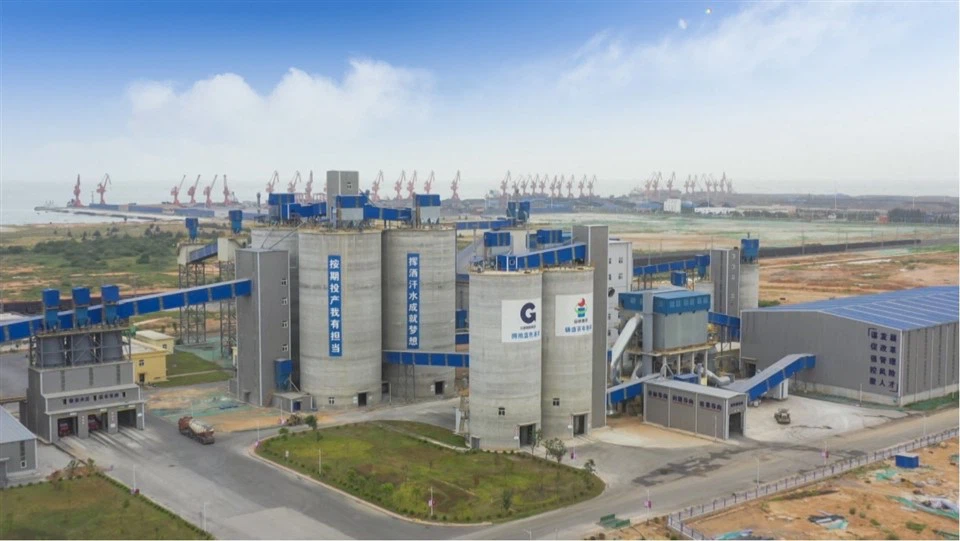
Wuhan Building Materials Industry Design & Research Institute Co., Ltd. (Wuhan Institute) established in 1965, is a wholly-owned subsidiary of Sinoma Energy Conservation Ltd. which belongs to CNBM Group. The company is specializing in engineering consulting, engineering design, equipment manufacturing and general contracting for fiber cement board, aerated concrete and comprehensive utilization of mineral resources, solid waste disposal, gas waste treatment, new energy power generation and other energy-saving and environmental protection fields. The company has a registered capital of 105 million yuan, 400 employees, including 16 professor-level senior engineers, 70 senior engineers, 90 engineers with medium-grade professional title or above, and 310 technical staff with other majors.
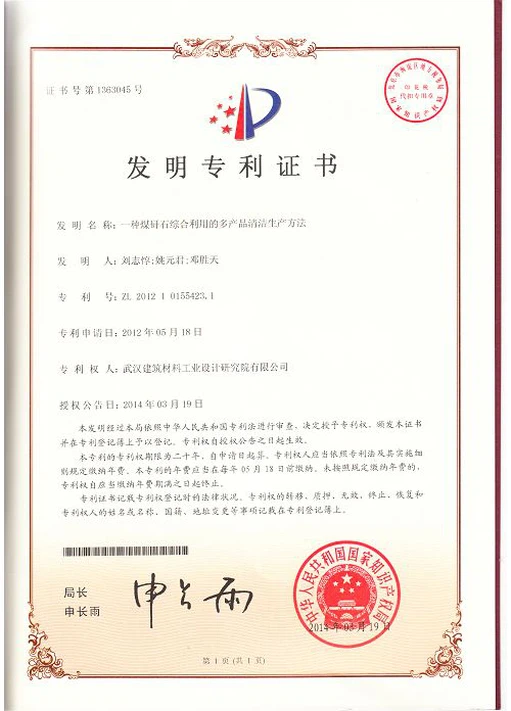
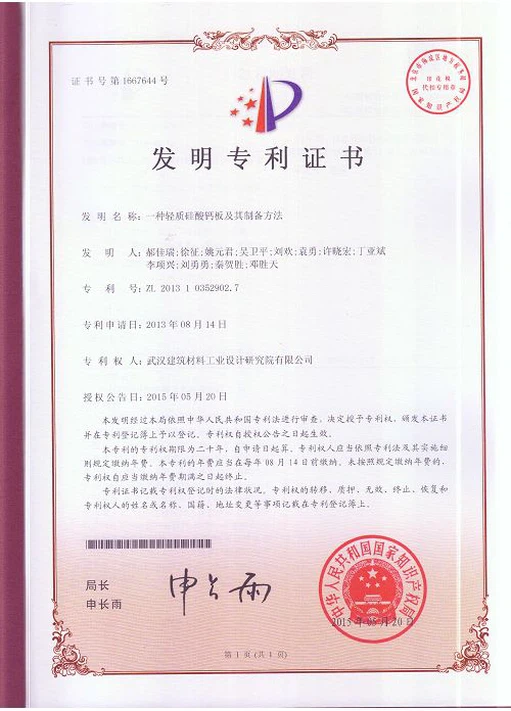
Certificate

FAQ
Q: What is the problem with steel slag?
Q: Is steel slag worth anything?
Q: What is the difference between iron slag and steel slag?
Q: Is steel slag toxic?
Q: Why can't slag be used?
Q: Will a magnet stick to slag?
Q: What do steel mills do with slag?
Q: Can slag be sold?
Q: What can you do with steel slag chunks?
Q: Is slag worthless?
Q: Is steel slag a waste?
Q: Is slag a carcinogen?
Q: Can slag have gold in it?
Q: What hazards are associated with slag?
Q: Is slag Dust toxic?
Q: Does slag have lead in it?
Q: Why is slag bad for the environment?
Q: What does slag do to concrete?
Q: Can you use slag under asphalt?
Q: Can you use slag as paver base?
Hot Tags: steel slag and slag treatment, China steel slag and slag treatment manufacturers, suppliers, factory, Sand and Gravel Aggregate processing system, Energy Conservation and Environment Protection, high temperature Steel Slag and Slag Treatment, gravel aggregate production line, Cement Kiln Co processing Of Construction Waste, Sand Aggregate production line
Previous
Sand And Gravel AggregateYou Might Also Like


Send Inquiry