




Steel Slag And Slag Treatment
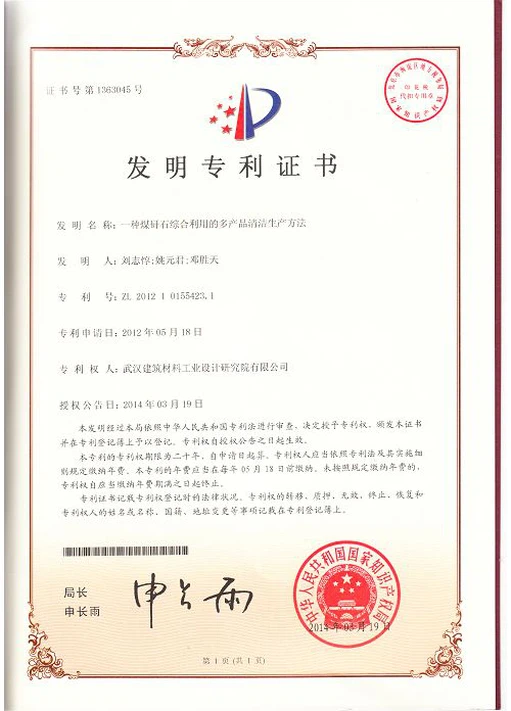
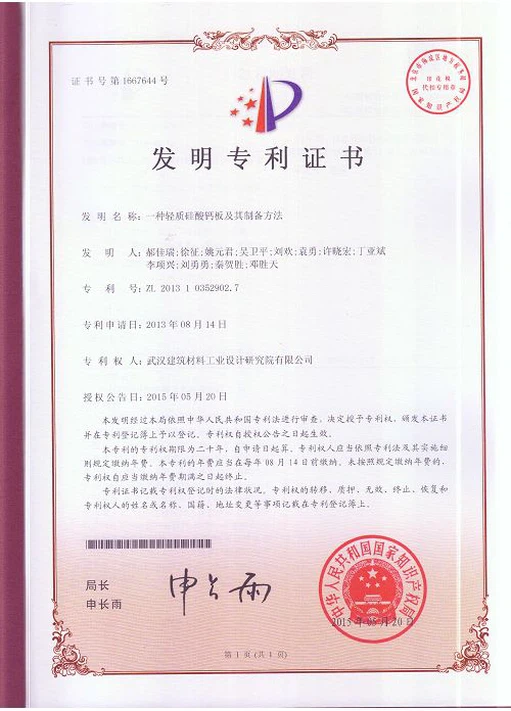
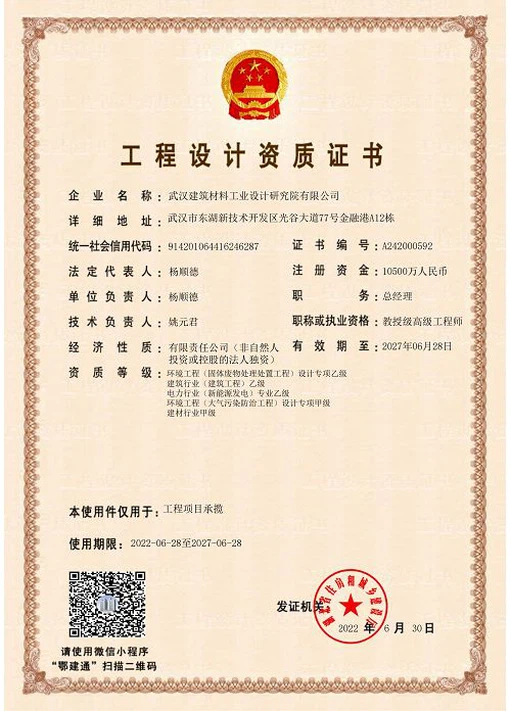
Wuhan Building Material lndustry Design & Research Institute Co., Ltd., subordinated to CNBM was established in 1965. lt is the leading company in fiber cement board / calcium silicate board machinery industry, and has sold more than 200 lines all over the world.The Company's design center has more than 200 engineers, who can give customers the most professional design. The Company also has modern laboratories to help the customers to choose the most suitable rawmaterials and production formula through the testing of raw materials and final products.
Why Choose Us
Factory Strength
Wuhan Building Material lndustry Design & Research Institute Co., Ltd., subordinated to CNBM was established in 1965. lt is the leading company in fiber cement board / calcium silicate board machinery industry, and has sold more than 200 lines all over the world.
Rich Experience
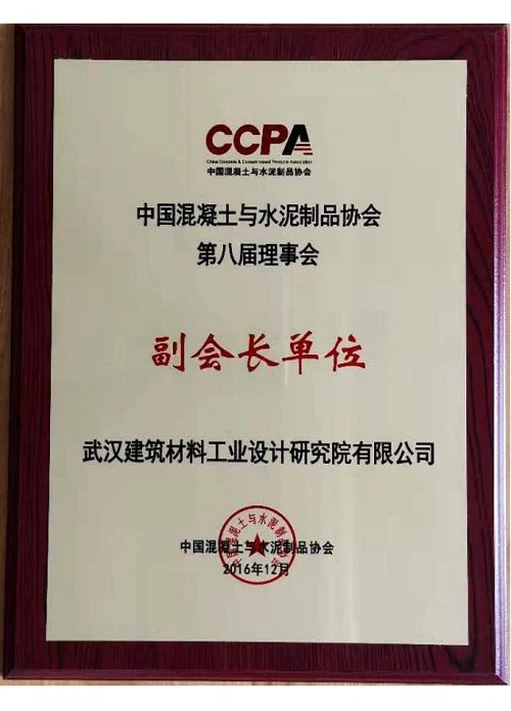
Wuhan Institute has been deeply engaged in the Calcium Silicate board / Fiber Cement board industry for more than 40 years, so far, it has cooperated with many large group companies such as SHERA, Saint-Gobain, ASK, Conch Cement, etc., and has cooperated in more than 200 production lines in the world.
Professional Team
400 Employees, including 16 professor-level senior engineers, 70 senior engineers, 90 engineers with medium-grade professional title or above, and 310 technical staff with other majors.
Quality Control
The Company also has modern laboratories to help the customers to choose the most suitable rawmaterials and production formula through the testing of raw materials and final products.
Related Product

In recent years, along with much more strict national management and control on environment protection and mineral resource areas, a lot of aggregates enterprises are forced to be shut down; ancient aggregate industry is confronted with reshuffle, therefor, new-type production line catering to era demands is ready to come out at its call.

Cement Kiln Co-processing Of Construction Waste
The traditional sanitary landfill, construction of waste power plant fly ash disposal and other problems plagued the local governments, the use of cement kiln co-processing of domestic waste, can completely solve the dioxins, slag, fly ash, etc.

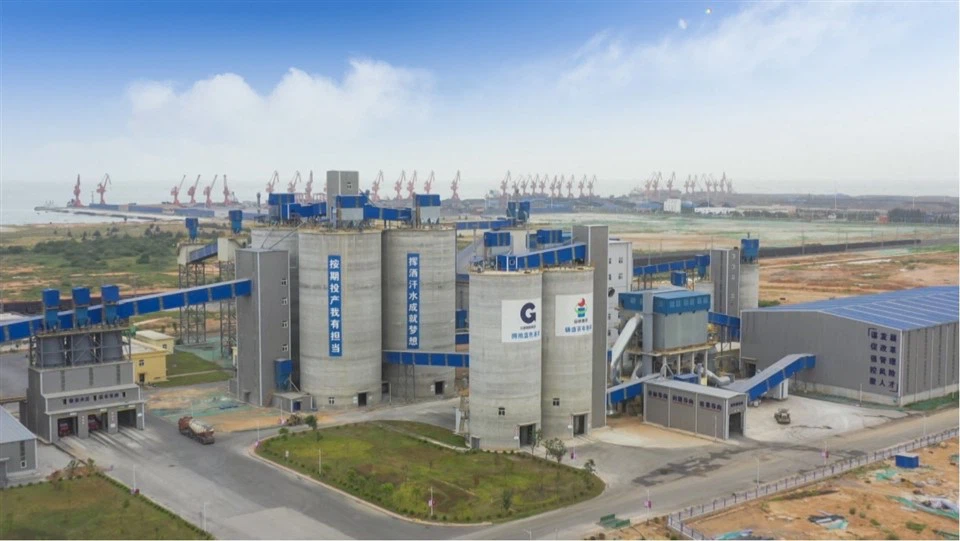
The general contracting project of Beihai Tieshan Port Solid Waste Recycling and Environmental Protection Complex is specially aimed at the comprehensive utilization of solid waste resources in areas such as steel slag, red mud and manganese slag.
Steel Slag and Slag Treatment are considered secondary raw materials and are used or added during the process to improve steelmaking practice. Steelmaking slag added into ladle slags makes it possible to minimize slag line wear. BOF-converter slags are also applied in buildup, foaming, or slag splashing practices carried out to prolong the lifespan of refractory lining. Also, EAF slags are commonly used to avoid refractory wear and decrease energy consumption. It is known that cement concrete is one of the most common building materials. Blast furnace crystallized slags are used in cement production, in different percentages.
Benefits of Steel Slag and Slag Treatment
Cost-effectivenes
The main advantage of steel slag is its cost-effectiveness. Because it's produced as a by-product of metal melting, it's generally much cheaper than traditional aggregates or materials like asphalt or concrete. Additionally, steel slag has great compressive strength and can be used as an alternative to gravel or other materials in roadbeds and foundations. Furthermore, its heat resistance makes it useful for applications where temperatures may get hot enough to damage more traditional materials like asphalt.
Environmental advantages
Steel slag also has several environmental advantages over traditional materials. For example, it reduces air pollution because its production doesn't require burning fossil fuels like oil or natural gas that produce harmful emissions when burned. Additionally, because it doesn't require mining to obtain raw materials (like sand and gravel do), there are fewer environmental impacts associated with steel slag production than with traditional construction materials. Finally, steel slag is resistant to erosion so roads built with this material can last longer than roads made with other types of aggregate or asphalt.
Types of Steel Slag and Slag Treatment
Blast furnace slag
Blast furnace slag is recovered by melting separation from blast furnaces that produce molten pig iron. It consists of non-ferrous components contained in the iron ore together with limestone as an auxiliary materials and ash from coke. Approximately 290 kg of slag is generated for each ton of pig iron. When it is ejected from a blast furnace, the slag is molten at a temperature of approximately 1,500℃. Depending on the cooling method used, it is classified either as air-cooled slag or granulated slag.
Steelmaking slag
This slag is a byproduct from steelmaking processes in which the components of pig iron and steel-scrap are modified in order to produce steel that is so highly valued for excellent toughness and workability.Steelmaking slag consists of converter slag that is generated by converter and electric arc furnace slag that is generated during the electric arc furnace steelmaking process that uses steel-scrap as the raw material.In the same way as air-cooled blast furnace slag, converter slag is cooled slowly by natural cooling and water spray in a cooling yard. It is then processed and used for various iron and steel slag (converter) applications. Approximately 110 kg of slag is generated for each ton of converter steel.
Application of Steel Slag and Slag Treatment
Steel slag powder made from steel slag can be used as cement mixed material.
Steel slag as a mineral admixture can be used for concrete.
After desulfurization of steel slag, it can be used as fertilizer, cement raw material and saline-alkali land reforming agent.
High strength artificial reef concrete is made from steel tailings.
Preparation of super low shrinkage tailing high strength concrete from steel tailing.
Steel slag grinding powder can be made into steel slag cement, steel slag composite powder and curing agent.
The steel extracted from the slag can be cast into billets.
The steel slag can be used as the base material for railway foundation, large area pavement foundation, square, etc.
After grinding, the steel slag can be used as color pavement brick, etc.
Process of Steel Slag and Slag Treatment
Step 1 Steel Slag Crushing
After the initial crushing by a jaw crusher, the steel slag is reduced to a size smaller than 60 mm.Then, the crushed steel slag is conveyed to a vibrating screen, where steel slag particles larger than 25 mm in diameter are transported to a cone crusher for secondary crushing, resulting in a particle size smaller than 25 mm.
Step 2 Steel Slag Grinding
In this step, we utilize a steel slag rod mill to grind the crushed steel slag, ensuring uniformity of the final product.If a powdered steel slag product is required, a combination of rod mill and vertical roller mill or vertical roller mill andball mill can be selected. This step can be equipped with a dust collector for dust removal operations, collecting the ground dust.
Step 3 Steel Slag Separation
Steel slag separation typically employs magnetic separation, aiming to extract useful iron metals from the slag.Both steel particles and iron powder in the steel slag exhibit magnetism. Therefore, magnetic separators are used to further purify the steel slag, obtaining a mixture of steel particles and iron powder, as well as waste residue.In addition to magnetic separation, utilizing shaking tables for gravity separation of steel slag can also achieve high recovery rates of iron concentrates.
Step 4 Particle Classification
Using a vibrating screen to sieve metal iron particles of various sizes allows for the classification of steel particles and iron powder into coarse, medium, fine, and ultrafine grades, depending on the product's intended application.
Characteristics of Steel Slag And Slag Treatment Materials
Physical Properties
Steel slag aggregates are highly angular in shape and have rough surface texture. They have high bulk specific gravity and moderate water absorption (less than 3 percent). Table 18-1 lists some typical physical properties of steel slag.
Chemical Properties
The chemical composition of slag is usually expressed in terms of simple oxides calculated from elemental analysis determined by x-ray fluorescence. Table 18-2 lists the range of compounds present in steel slag from a typical base oxygen furnace. Virtually all steel slags fall within these chemical ranges but not all steel slags are suitable as aggregates. Of more importance is the mineralogical form of the slag, which is highly dependent on the rate of slag cooling in the steel-making process.
Mechanical Properties
Processed steel slag has favorable mechanical properties for aggregate use, including good abrasion resistance, good soundness characteristics, and high bearing strength. Table 18-3 lists some typical mechanical properties of steel slag.
Thermal Properties
Due to their high heat capacity, steel slag aggregates have been observed to retain heat considerably longer than conventional natural aggregates. The heat retention characteristics of steel slag aggregates can be advantageous in hot mix asphalt repair work in cold weather.
Our Factory

Certificate


FAQ
Hot Tags: steel slag and slag treatment, China steel slag and slag treatment manufacturers, suppliers, factory, Energy Conservation and Environment Protection, Sand and Gravel Aggregate processing system, gravel aggregate production line, Sand Aggregate production line, high temperature Steel Slag and Slag Treatment, Cement Kiln Co processing Of Construction Waste
You Might Also Like


Send Inquiry